- Closed as of Wednesday, 24th Dec 2025, re-opening Friday, 16th January 2026
- Request a Consultation for 2026

Abdominoplasty is a surgical procedure designed to address concerns such as excess abdominal skin, weakened tissue and muscle separation that may arise after pregnancy, significant weight changes or ageing. The procedure involves removing excess skin and tightening the underlying structures when clinically indicated, with the goal of adjusting the abdominal contour in a carefully planned and medically appropriate way. Patients often seek information about this operation to better understand what is involved, how it is performed and what the recovery period may entail.
Dr Yezdi Mistry is a Specialist Plastic and Reconstructive Surgeon based in Newcastle, NSW, who provides personalised surgical care grounded in evidence-based practice. After obtaining his Fellowship in Plastic Surgery through the Royal Australasian College of Surgeons, Dr Mistry established his private practice in Newcastle following years of surgical training and hospital experience. His approach centres on understanding each patient’s unique circumstances, offering thorough assessments and discussing realistic, medically appropriate outcomes tailored to individual needs.
Dr Mistry regularly undertakes professional development and advanced training in both Australia and internationally, including specialised body contouring education in Paris. His experience includes the use of modern technologies and techniques designed to support precise surgical planning and patient-centred outcomes. During your consultation in Newcastle, Dr Mistry will take the time to review your medical history, examine your abdominal anatomy and explain what an abdominoplasty may achieve for you based on your personal goals and clinical presentation.
Individuals who have concerns related to excess abdominal skin or weakened abdominal tissues may be potential candidates. This may follow pregnancy, weight changes or ageing. Suitability is confirmed only after a detailed consultation with Dr Yezdi Mistry in Newcastle, where your anatomy, goals and medical history are reviewed carefully.
Yes, the procedure can be appropriate for adults of any gender depending on their unique anatomy and clinical needs. Dr Mistry routinely consults with men and women across a wide age range throughout Newcastle and the Hunter region. During your appointment, suitability will be assessed based on your health, expectations and individual circumstances.
Stable weight helps support more predictable outcomes over time. Significant weight fluctuations after surgery may affect the abdominal contour achieved during the procedure. Dr Mistry will discuss your weight history and advise whether additional stabilisation is recommended before proceeding.
Yes, when clinically indicated, the procedure may include tightening of separated abdominal muscles. This is commonly assessed in people who have experienced changes after pregnancy or significant weight variations. Dr Mistry will examine you during consultation to determine whether muscle repair may benefit your situation.
Many individuals consider abdominoplasty once they have completed pregnancy and notice persistent abdominal changes that do not improve with time. Dr Mistry will discuss appropriate timing to ensure your body has fully recovered before considering surgery. Suitability depends on your health, anatomy and whether future pregnancies are planned.
Age alone does not determine suitability for the procedure. Instead, overall health, medical history and the ability to undergo anaesthesia safely are the key considerations. Dr Mistry performs a thorough assessment to ensure that proceeding would be medically appropriate for you.
Smoking affects circulation and can impair wound healing, increasing the risk of complications. For this reason, Dr Mistry strongly advises complete cessation well before surgery. He will discuss the required timeframe and provide guidance to help support safer preparation.
In some cases, multiple procedures may be considered, depending on your health and surgical goals. Dr Mistry evaluates this on an individual basis to ensure that any combination of treatments is medically suitable. If a combined approach is not recommended, he will explain the safest alternative options.
It may be suitable once your weight has remained stable for an appropriate period and your nutritional status is adequate. Patients who have experienced significant weight changes require careful assessment to ensure the procedure is safe. Dr Mistry will review these factors in detail during consultation.
Certain medical conditions may increase surgical or anaesthetic risks. These factors are reviewed thoroughly during your consultation to ensure your wellbeing remains the priority. If adjustments or additional medical evaluations are required, Dr Mistry will explain these clearly.
During your consultation, Dr Mistry examines your abdomen, reviews your medical history and discusses your expectations. This conversation helps clarify whether the procedure is suitable and what individual factors may influence planning. You will also have the opportunity to ask questions and understand the surgical journey in detail.
Some individuals require pre-operative tests such as blood work or imaging, depending on their medical background. These assessments help ensure you are medically prepared for surgery. Dr Mistry will explain what tests, if any, are required in your case.
Certain medications or supplements may need to be paused or adjusted to support safer surgery and healing. Dr Mistry will review your current list and provide tailored recommendations. It is important to follow these instructions closely for your safety.
Yes, stopping smoking well before surgery is strongly recommended to help support healing and reduce complication risks. Dr Mistry will advise how far in advance cessation should occur. Maintaining a smoke-free period after surgery is also important for recovery.
Setting up a comfortable recovery space before your procedure can help ease the initial days at home. Having items such as pillows, easy-to-access medications and supportive seating prepared in advance can be beneficial. Planning meals, transport and assistance can also streamline your early recovery.
Yes, you will need someone to accompany you home and assist during the first few days. Early mobility and wound care instructions can be easier to follow with support. This assistance helps ensure your safety during the initial healing period.
Fasting is necessary before a general anaesthetic and must be followed precisely. You will receive clear guidelines outlining when to stop eating and drinking. These instructions are essential for safe anaesthetic management.
Yes, you will need time off work, although the duration depends on the nature of your job. Physically demanding roles generally require a longer break than office-based work. Dr Mistry will provide guidance specific to your occupation and recovery needs.
It is advisable to avoid or limit alcohol before your procedure, as it can affect healing and anaesthetic safety. Dr Mistry will provide personalised recommendations based on your health. Avoiding alcohol in the days leading up to surgery supports a safer experience.
Light exercise is usually acceptable, but high-intensity activity may need to be reduced. Maintaining general fitness can support post-operative recovery, but strenuous movements should be avoided close to surgery. Dr Mistry will clarify what activity level is appropriate.
All surgical procedures involve risks such as bleeding, infection or delayed healing. Dr Mistry will explain these risks clearly and discuss how they are managed. Understanding these factors helps you make an informed decision.
The procedure requires an incision that results in a scar positioned low on the abdomen. Scar appearance varies between individuals based on genetics and healing. Dr Mistry will provide advice on scar care and how it may change over time.
Changes in skin sensation around the abdomen can occur and are often temporary. These may gradually improve over several months. Dr Mistry will outline what to expect based on your surgical plan.
Outcomes depend on your anatomy, skin characteristics and healing response. Dr Mistry provides personalised guidance to help you understand what the procedure may achieve for you. Realistic expectations are an important part of the decision-making process.
Some individuals may experience wound concerns, fluid accumulation or delayed healing. These issues are usually manageable with early assessment and appropriate care. Regular follow-up allows Dr Mistry to monitor your progress closely.
Results are generally long-lasting when weight remains stable and healthy lifestyle habits are maintained. Natural ageing may still influence abdominal tissues over time. Dr Mistry will explain how long-term factors may affect outcomes.
It is normal for the human body to have slight natural asymmetry. Some degree of difference may persist even after surgery. Dr Mistry will discuss these possibilities before the operation.
In some situations, a secondary procedure may be discussed to address healing variations or anatomical factors. This is evaluated on a case-by-case basis. Dr Mistry will guide you if further treatment is ever recommended.
Certain health or lifestyle factors can contribute to slower healing. Regular review helps identify any concerns early. Dr Mistry will support you with guidance tailored to your situation.
Some individuals notice improved abdominal stability when muscle repair is part of the procedure. This depends on your anatomy and the extent of separation. Dr Mistry will explain whether this is relevant for you.
The duration varies depending on your anatomy, the need for muscle repair and other individual factors. Dr Mistry will provide an estimated timeframe during your consultation. The priority is a precise and careful approach tailored to your needs.
The procedure is performed under general anaesthesia with an experienced anaesthetist present throughout. Your vital signs are monitored continuously to support your safety. The anaesthetist will discuss your medical history and answer questions before surgery.
The incision is typically made low on the abdomen to allow access to excess skin and underlying tissues. Its position is planned to suit your anatomy and surgical goals. Dr Mistry will explain the expected location during consultation.
Muscle repair is only performed if clinically indicated, such as when rectus separation is present. Dr Mistry assesses this during your examination. He will explain whether muscle tightening applies in your case.
Drains may be placed temporarily to help remove fluid during early healing. They are usually removed after a short period depending on output. Dr Mistry will explain how they are managed.
Most individuals stay in hospital for at least one night for monitoring and early recovery. Discharge depends on pain control, mobility and overall progress. You will receive clear guidelines before leaving hospital.
Comfortable clothing, essential medications and personal toiletries are usually recommended. You will receive instructions outlining any additional items you may need. Being prepared can make your hospital stay smoother.
Yes, you will meet the anaesthetist prior to surgery to review your medical history and finalise plans. They will explain the anaesthetic process and answer any concerns. This discussion helps ensure your safety throughout the procedure.
No, you must have a responsible adult accompany you home. This is essential for safety due to the effects of anaesthesia and limited mobility. Support is also helpful in the early stages of recovery.
Yes, detailed written instructions are provided when you leave the hospital. These include guidance on wound care, physical activity and follow-up visits. Following these instructions closely helps support your recovery.
Early healing generally progresses over several weeks, with gradual improvements as swelling decreases. Activity levels are increased cautiously under guidance from Dr Mistry. Each person’s timeline may vary based on individual factors.
Light activities can often resume within the first couple of weeks. More demanding tasks are introduced gradually as your healing progresses. Dr Mistry will provide specific recommendations based on your occupation and lifestyle.
Some discomfort is expected, especially in the first several days. Pain relief medications will be provided to help manage this. Discomfort typically improves as the tissues recover.
You will receive instructions on keeping the incision clean, dry and protected. Proper wound care supports effective healing and reduces the risk of concerns. Dr Mistry and his team are available to guide you if questions arise.
Exercise is reintroduced slowly, starting with gentle walking and progressing to more active movements over time. Strenuous or abdominal-focused exercises should be delayed until approved by Dr Mistry. This staged approach helps protect your healing tissues.
Yes, follow-up visits are an important part of your care plan. They allow Dr Mistry to monitor healing and address any concerns early. Regular reviews help support a smoother recovery process.
Swelling decreases gradually over several months as tissues settle. The timeline varies based on your healing response and anatomy. Dr Mistry will discuss what you may expect at different stages.
Compression garments are commonly recommended to support the abdomen and help manage swelling. You will receive guidance on how long to wear them and how to ensure proper fit. Wearing them consistently can support comfort during early recovery.
Final results take time to become noticeable, as swelling and tissue maturation occur gradually. Many individuals see continued refinement over several months. Dr Mistry will explain how your results may evolve.
If you experience symptoms that seem out of the ordinary, you should contact Dr Mistry’s Charlestown clinic promptly. Early assessment can help prevent issues from progressing. His team will advise whether a review is needed.
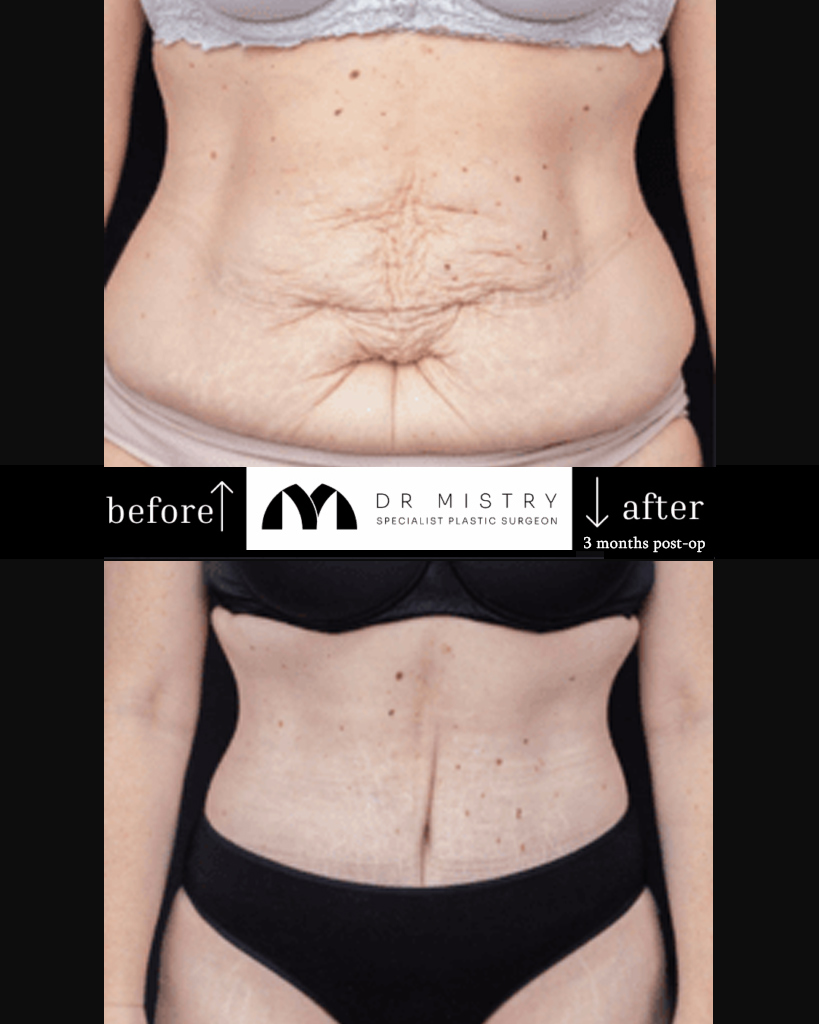
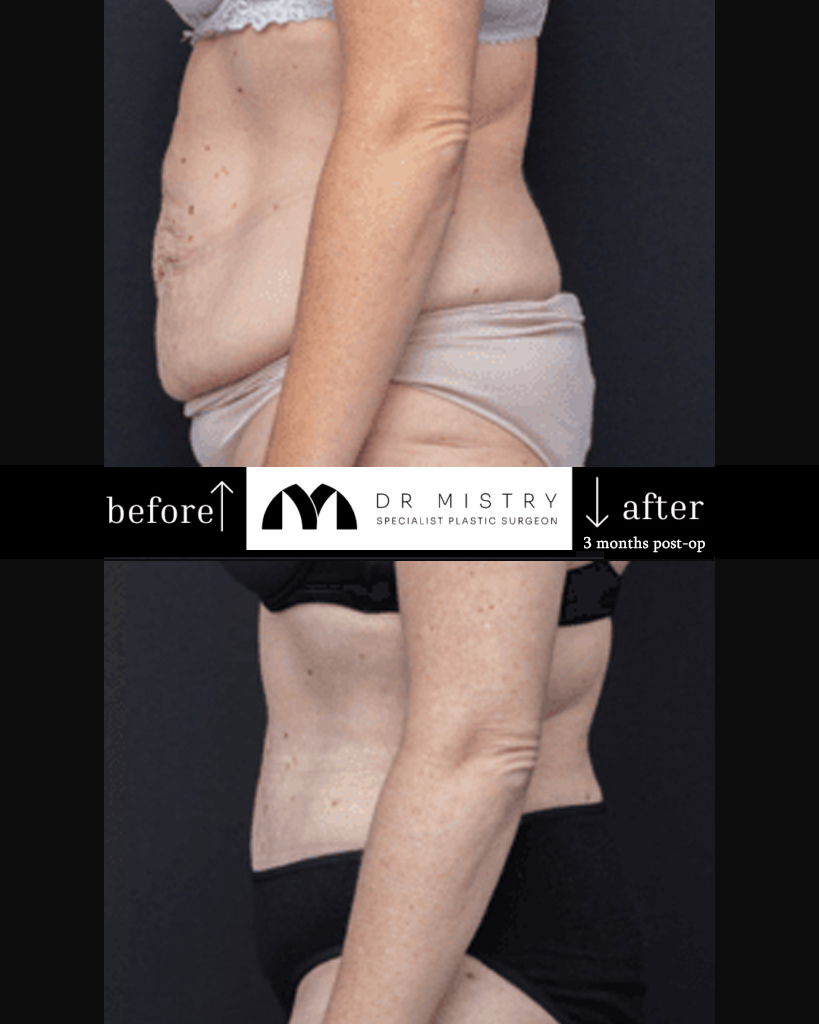
Abdominoplasty is typically performed under general anaesthesia in a licensed hospital setting. The procedure commonly begins with a carefully planned incision placed low on the abdomen, allowing access to excess skin and underlying tissues. Where appropriate, weakened or separated abdominal muscles (rectus diastasis) may be tightened as part of the operation, depending on your clinical assessment and agreed surgical plan.
Excess skin and, in some cases, underlying tissue are removed to help address abdominal laxity. The remaining skin is then repositioned, and the incision is closed with sutures in multiple layers to support healing. In some cases, temporary drains may be placed to help manage fluid in the early stages after surgery; Dr Mistry will advise if this is relevant for you.
The specifics of the procedure, including incision length, muscle repair and any adjunct techniques (such as the use of VASER or RENUVION), vary between individuals and are guided by your anatomy, health status and goals. Hospital stay usually involves at least one night of monitoring, during which pain control, mobility and early progress are carefully assessed. Before you go home, you will receive written and verbal instructions on wound care, activity restrictions, garments and follow-up appointments to support your recovery. It is important to understand that abdominoplasty is a significant operation with potential risks, limitations and a period of recovery that can extend over several weeks to months. During your consultation, Dr Mistry will outline these aspects in detail, answer your questions and help you weigh up whether the procedure aligns with your priorities and health profile.
If you are considering abdominoplasty in Newcastle or the wider Hunter region, the next step is to arrange a consultation with Dr Yezdi Mistry at his Charlestown practice. At this appointment, he will take a detailed medical history, perform a physical examination of your abdomen and discuss your concerns, lifestyle and expectations. This allows him to advise whether abdominoplasty is appropriate and, if so, what type of approach may be considered in your case.
Before your consultation, it can be helpful to read through the FAQ information, write down any questions you have and think about your goals in practical, health-focused terms. You may also wish to bring a list of current medications, past surgeries and relevant medical conditions, as these details are important for planning. Dr Mistry will then explain the procedure, potential risks, anticipated recovery and likely timeframes, so you can make an informed decision about whether to proceed. Only a face-to-face consultation can determine your suitability for abdominoplasty and whether it is clinically recommended. If you decide to move forward, you will be given clear pre-operative instructions, information about hospital arrangements, and an outline of follow-up care. Throughout this process, the focus remains on your safety, understanding of the procedure and ensuring that any decision is made with realistic expectations and thorough information.
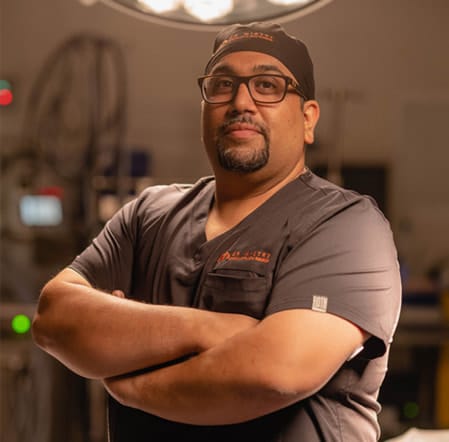
Dr Yezdi Mistry is a Specialist Plastic and Reconstructive Surgeon based in Newcastle, NSW. With extensive training and experience in both reconstructive and aesthetic surgery, Dr Mistry is committed to providing safe, evidence-based care that is tailored to each patient’s individual needs.
After completing his Fellowship of the Royal Australasian College of Surgeons (FRACS) in Plastic Surgery in 2013, Dr Mistry relocated to Newcastle with his family in 2015. He began his work as a Visiting Medical Officer (VMO) in Plastic and Hand Surgery at John Hunter Hospital before establishing his private practice in 2017. His practice offers a comprehensive range of reconstructive and aesthetic procedures for the breast, body, face, and skin.
Dr Mistry’s approach to patient care is grounded in trust, respect, and open communication. From initial consultation to recovery, he aims to ensure patients feel informed, supported, and comfortable throughout their surgical journey. He is dedicated to maintaining the highest professional and ethical standards in all aspects of his work.
To remain at the forefront of modern surgical techniques, Dr Mistry continues to pursue ongoing professional development both in Australia and internationally. He was Australia’s first delegate at the Body Contouring Academy in Paris, where he received advanced training in body contouring and skin-tightening techniques, including VASER and RENUVION technologies.
Fill in your details and our friendly team will be in touch with you
Please Note: Information provided on Dr Mistry’s website is provided as a basic guide, it does not constitute a diagnosis and should not be taken as medical advice. Any surgical or invasive procedure carries risks.



“I care because it’s my job as a surgeon, as a plastic surgeon, to do the appropriate thing and to give you a good outcome. I want to leave knowing that I can tell a patient, hand on heart, that I did the very best I could and that I looked after them, so when I see them post op later that day or the next morning, that they feel they were in good hands.”
– Dr Yezdi Mistry
Request a Consult
