Breast Lift Surgery Newcastle
Breast lift surgery, also known as mastopexy, is a procedure designed to address breast sagging (ptosis), changes in breast shape, stretched skin, and alterations in nipple position. These changes commonly occur following pregnancy, breastfeeding, weight fluctuations, ageing, or natural variations in breast tissue. In appropriate clinical circumstances, a breast lift may reposition the breast tissue, elevate the nipple-areolar complex, and remove excess skin to improve breast shape and contour. Sounds better.
Dr Yezdi Mistry (BHB, MBChB, FRACS – Plastic Surgery) is a Specialist Plastic and Reconstructive Surgeon who consults in Charlestown, NSW, for patients across Newcastle and Lake Macquarie. He operates in accredited hospital facilities, with a focus on patient-centred care and individualised surgical planning.
What Should I Know About Breast Lift Surgery?
Breast lift surgery is designed to address structural changes in the breast by adjusting the skin envelope and supporting internal tissue. It focuses on repositioning the breast and nipple-areola complex rather than increasing or reducing breast size.
This breast surgery procedure involves reshaping and repositioning the breast tissue, elevating the nipple-areolar complex, and removing excess skin where appropriate. A breast lift is designed to improve breast shape and contour rather than significantly increase breast volume. Patients seeking both a lift and additional volume may wish to discuss whether breast implants or fat grafting are suitable options.
Many women who attend consultations are not primarily concerned with volume. Instead, they may notice that the breasts sit lower on the chest, the nipple position has changed, or the overall contour appears different in clothing and bras.
A breast lift may involve
- Removal of excess or stretched skin
- Repositioning of the nipple-areola complex
- Adjustment and support of breast tissue
- Consideration of asymmetry where present
Why Might I Consider a Breast Lift?
Breasts change throughout adult life. These changes may occur gradually or become more noticeable after events such as pregnancy, breastfeeding, or weight loss. The skin may stretch, and the breast tissue may settle lower on the chest wall.
A breast lift may be considered when concerns relate primarily to breast position, nipple level, or contour rather than size. It is important to understand that the procedure addresses the current anatomy and does not prevent future changes over time.
Patients commonly describe:
- A lower breast position than previously
- Downward-pointing nipples
- Increased length in the lower breast
- Stretched skin or enlarged areolae
- Differences in symmetry
How Do I Know Whether I Am Suitable for Breast Lift Surgery?
Suitability of breast lift surgery (mastopexy) can only be determined following a consultation with a Specialist Plastic Surgeon. During this assessment, Dr Yezdi Mistry will review your medical history, examine your breast anatomy, and discuss your concerns and goals, and expectations. Not every patient requires the same approach, and timing may vary depending on individual circumstances.
A number of factors are considered when determining whether a breast lift may be appropriate, including breast shape, skin quality, the degree of breast sagging(ptosis), nipple position, overall health, and lifestyle factors. The consultation also provides an opportunity to discuss what the procedure may address, its limitations, the expected recovery process, and potential risks.
In general, patients may be suitability candidates if they :
- Are in good overall health
- Have a stable body weight
- Are concerned about breast sagging, stretched skin, or changes in breast shape
- Understand that breast lift surgery results in permanent scars
- Have realistic expectations about the potential outcomes of surgery
In some circumstances, surgery may be postponed or additional preparation may be recommended. Factors such as smoking or nicotine use, significant weight fluctuations, untreated medical conditions, or plans for pregnancy in the near future can influence surgical planning and outcomes.
During your consultation, Dr Mistry will discuss whether a breast lift is appropriate for your individual circumstances and whether any additional breast procedures should be considered as part of your treatment plan.
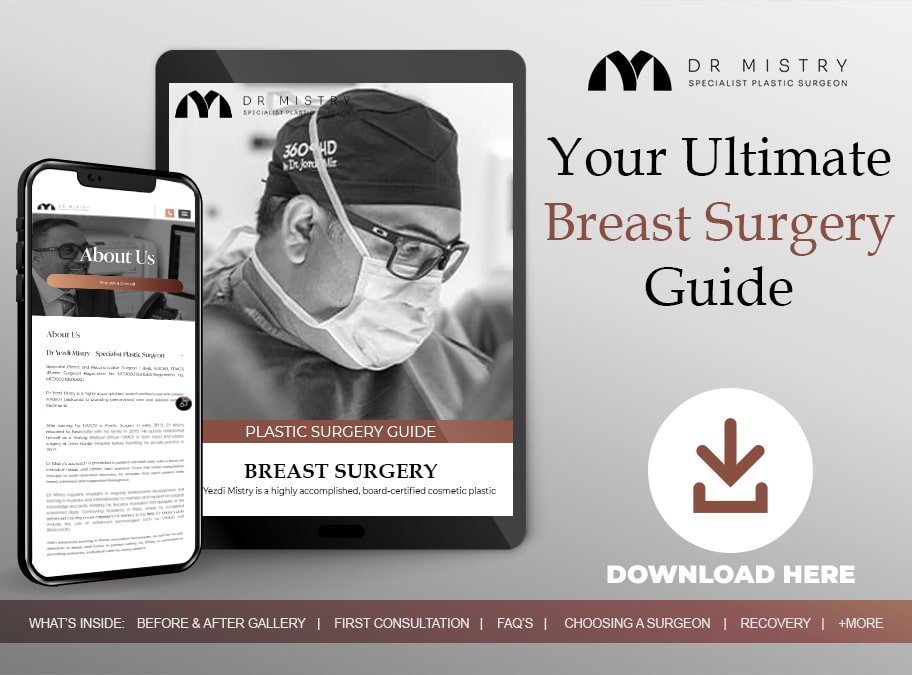
Download Dr Mistry’s Breast Surgery Guide
What Happens During My Consultation in Newcastle?
Your consultation is an opportunity to discuss your concerns, learn more about breast lift surgery, and determine whether the procedure may be appropriate for your circumstances. Dr Yezdi Mistry will take the time to understand what changes you are hoping to address and explain the surgical options that may be available. The appointment is designed to provide clear information about the procedure, recovery, potential risks, and expected scar placement so that you can make an informed decision.
During your consultation, you can expect:
- A discussion about your concerns and goals
- A clinical examination where appropriate
- An explanation of the surgical options that may be suitable
- Discussion of expected scars and recovery requirements
- Information about potential risks and limitations of surgery
- Time to ask questions and discuss any concerns
The consultation is intended to help you understand whether breast lift surgery aligns with your goals and to provide the information needed to make an informed decision about treatment.
What Happens On the Day of Breast Lift Surgery?
Breast lift surgery (mastopexy) is typically performed in an accredited hospital under general anaesthetic. Before surgery, Dr Yezdi Mistry will review the planned procedure with you and make preoperative markings while you are standing. These markings help guide breast reshaping, skin removal, and nipple positioning during surgery.
The procedure is tailored to each patient and may vary depending on factors such as breast shape, skin quality, nipple position, and the degree of breast sagging. The surgical technique and scar pattern are selected based on your individual anatomy rather than a single standard approach.
During surgery, excess skin is removed and the breast tissue is reshaped to improve breast position and contour. The nipple-areolar complex is repositioned where required, and the remaining skin is adjusted to support the new breast shape. In some cases, additional procedures such as breast augmentation or breast reduction may be discussed as part of the overall treatment plan.
Breast lift surgery commonly involves:
- Incisions designed according to the planned lift pattern
- Reshaping and repositioning of breast tissue
- Removal of excess skin
- Repositioning of the nipple-areolar complex
- Closure of the incisions and application of dressings and postoperative support garments
Following surgery, you will spend time in the recovery area before returning to the ward. Dr Mistry and the nursing team will provide instructions regarding wound care, activity restrictions, follow-up appointments, and the early stages of recovery.
What Breast Lift Technique Might I Need?
There is no single technique that suits all patients. The surgical approach depends on multiple anatomical factors, including breast volume, skin quality, and the degree of descent.
Some patients may require a more limited approach, while others need more extensive skin adjustment. The choice of technique is guided by clinical assessment and surgical planning.
Factors influencing technique include:
- Degree of breast descent
- Nipple position
- Amount of excess skin
- Breast volume and tissue quality
- Presence of asymmetry
Several breast lift techniques are available, and the most appropriate approach depends on the degree of breast sagging, the position of the nipple, the amount of excess skin, and the overall shape of the breast.
Breast lift techniques differ primarily in the pattern of incisions required to reshape the breast and remove excess skin. Some patients may be suitable for a more limited scar pattern, while others may require a more extensive lift to achieve the desired repositioning of the breast and nipple.
During your consultation, Dr Yezdi Mistry will explain the technique recommended for your anatomy, the expected scar pattern, and the factors that have influenced this decision.
What Incisions and Scar Patterns Are Used for a Breast Lift?
Breast lift surgery requires incisions to remove excess skin, reshape the breast, and reposition the nipple-areolar complex. The location and extent of these incisions will depend on your anatomy and the degree of breast sagging being addressed.
Several scar patterns may be used, including:
- Around the Areola (Periareolar) A scar placed around the edge of the areola. This approach may be suitable in selected patients with mild breast sagging.
- Vertical (Lollipop) Pattern A scar around the areola combined with a vertical scar extending to the breast crease. This is commonly used when a greater degree of lifting and reshaping is required.
- Wise Pattern (Anchor) A scar around the areola, a vertical scar, and a scar hidden within the breast crease. This approach may be recommended when there is significant excess skin or more substantial breast sagging.
The most appropriate scar pattern is determined during consultation based on your breast shape, skin quality, nipple position, and surgical goals. Dr Mistry will explain the recommended approach and discuss the expected scar placement before surgery.
What Changes Will I Notice After a Breast Lift?
A breast lift is designed to address breasts sagging by lifting and reshaping breast tissue and nipple areolar complex to a higher position on the chest. These changes are best described in objective surgical terms rather than expectations of a specific appearance.
As healing progresses, patients may notice changes in breast shape, contour, and the way clothing and bras fit.
Outcomes vary between individuals due to differences in anatomy, healing, and tissue behaviour. It is also important to understand that future changes may still occur over time.
Changes that may be noticed after breast lift surgery include:
- A higher breast position on the chest
- Repositioning of the nipple-areolar complex
- Improved breast shape and contour
- Reduction in excess or stretched skin
- Changes in breast projection and breast profile
- Improved fit of bras, swimwear and clothing
Before & After Photos
The gallery contains examples of patients who have undergone breast lift surgery. These photographs may help illustrate different degrees of breast sagging, nipple position, breast shape, and postoperative healing.
When viewing before and after images, it is important to remember that every patient is unique. Individual anatomy, skin quality, healing, and surgical requirements vary, and the results shown should be viewed as examples only rather than a guarantee of any particular outcome.
Dr Yezdi Mistry can discuss how the changes shown in these photographs may relate to your individual circumstances during consultation.
What Is Recovery Like After Breast Lift Surgery?
Breast lift surgery recovery occurs gradually as the breast heals and settles, and involves several phases. During the early stages of recovery, it is common to experience swelling, bruising, tightness, and discomfort around the breast and chest. These typically improve over time as healing progresses.
Patients are usually advised to wear a postoperative support garment and follow their postoperative instructions carefully. Activities involving lifting, reaching, or strenuous upper body movement may be restricted during the initial recovery period.
During early recovery, patients may notice:
- Swelling and bruising
- A feeling of tightness in the breast or chest
- Temporary discomfort or tenderness
- Reduced comfort with and limited upper body movement
- Changes in breast sensation
The breasts will continue to settle and soften over the weeks and months following surgery.
When Can I Return to Work and Daily Activities?
The timing of your return to work and normal activities will depend on the nature of your occupation, the extent of surgery performed, and your individual recovery progress. Many patients are able to return to light, desk-based duties before those whose work involves lifting, repetitive arm movements, or other physical demands. Activities are usually resumed gradually to allow the breasts and surgical wounds time to heal.
During the early stages of recovery, patients are commonly advised to:
- Avoid heavy lifting and strenuous activity
- Limiting upper body exercise and high-impact activities
- Avoid movements that place excessive tension on the excisions
- Wear any recommended post-operative support garments
- Gradually increase activity as advised by their surgeon
Many patients can return to light daily activities within the first few weeks, while more strenuous activities may require a longer recovery period.
Dr Yezdi Mistry will provide guidance regarding the safe resumption of work, exercise, driving, and other daily activities based on your individual recovery.
How Will My Breasts Continue to Heal Over Time?
Healing following breast lift surgery continues well beyond the initial recovery period. As the months pass, swelling gradually settles, the breast tissues soften, and the breasts continue to adapt to their new shape and position.
It is also common for scars to change in appearance over time, typically becoming flatter and less noticeable as they mature. Some patients may experience temporary changes in breast or nipple sensation during recovery, which may improve gradually as healing progresses.
Over time, patients may notice:
- Continued reduction in swelling
- Softening of the breast tissues
- Ongoing changes in breast shape and contour
- Gradual settling of the breasts
- Scar maturation and fading
- Changes in breast or nipple sensation
The final outcome of breast lift surgery develops progressively, and it may take several months for healing and scar maturation to continue.
What Are the Risks and Complications of Breast Lift Surgery?
All surgical procedures carry risks, and these will be discussed in detail during your consultation with Dr Yezdi Mistry. The likelihood and significance of any complication varies between individuals and may be influenced by factors such as general health, smoking status, previous surgery, skin quality, and healing characteristics.
Potential risks and complications of breast lift surgery may include:
- Infection
- Bleeding or haematoma
- Delayed wound healing or wound separation
- Unfavourable scarring
- Breast asymmetry
- Changes in breast or nipple sensation, which may be temporary or permanent
- Difficulty with breastfeeding following surgery
- Partial or complete loss of the nipple-areolar complex (rare)
- Fat necrosis or firmness within the breast tissue
- Persistent swelling
- Dissatisfaction with breast shape, size, or symmetry
- Need for additional treatment or revision surgery
A detailed discussion of the risks, benefits, limitations, and alternatives to surgery forms an important part of the consultation process.
How Much Does Breast Lift Surgery Cost in Newcastle?
The cost of breast lift surgery varies between patients because the procedure is tailored to individual anatomy, surgical requirements, and treatment goals. For this reason, it is not possible to provide an accurate estimate without a consultation and clinical assessment.
Following your consultation, Dr Yezdi Mistry will discuss the recommended treatment plan and provide a personalised quotation outlining the anticipated costs associated with surgery.
The total cost may include:
- Surgeon’s fees
- Anaesthetist’s fees
- Hospital or day surgery facility fees
- Surgical consumables and implants (if applicable)
- Postoperative appointments and follow-up care
Any applicable fees, inclusions, and payment requirements will be discussed before proceeding with treatment.
What Longer-Term Care Should I Consider After a Breast Lift?
Breast lift surgery addresses breast shape, skin excess, and nipple position at the time of surgery. However, the breasts will continue to change naturally over time in response to ageing, gravity, hormonal influences, pregnancy, and weight fluctuations.
While no specific maintenance is required following complete healing, there are several factors that may help support long-term breast health and surgical outcomes.
Long-term considerations may include:
- Maintaining a stable body weight where possible
- Wearing appropriately fitted and supportive bras when comfortable
- Continuing routine breast health screening and self-awareness
- Protecting scars from sun exposure during the scar maturation period
- Being aware that pregnancy and significant weight changes may alter breast shape over time
- Seeking medical review if new symptoms, concerns, or changes develop
If you have concerns about changes to your breasts at any stage after surgery, Dr Yezdi Mistry can assess your individual circumstances and discuss appropriate management options.
What Should I Ask Dr Mistry During My Consultation?
Your consultation is an opportunity to discuss your concerns, learn more about breast lift surgery, and obtain information relevant to your individual circumstances. Asking questions can help you develop a clear understanding of the procedure, recovery process, and expected considerations before making a decision about treatment.
Questions you may wish to ask include:
- Am I a suitable candidate for breast lift surgery?
- What type of breast lift do you recommend for me and why?
- What scar pattern is likely in my case?
- Will a breast lift alone address my concerns, or should I consider other procedures?
- What can I expect during breast lift recovery?
- When can I return to work, exercise, and normal activities?
- What risks and complications are most relevant to my circumstances?
- How might future pregnancy or weight changes affect my results?
- What follow-up care will be required after surgery?
- What costs are associated with the procedure?
Dr Mistry will take the time to answer your questions and discuss the factors most relevant to your anatomy, goals, and treatment plan.