- Closed as of Wednesday, 24th Dec 2025, re-opening Friday, 16th January 2026
- Request a Consultation for 2026

Breast augmentation is a procedure some individuals consider when they wish to increase breast volume using implants. It is a planned surgical procedure that involves careful assessment of breast anatomy, tissue characteristics, and personal goals.
In Australia, only implants that meet the Therapeutic Goods Administration (TGA) standards are used, and patients undergo a thorough consultation to understand the risks, possible benefits, and available options before deciding whether surgery is appropriate.
Dr Yezdi Mistry is a Specialist Plastic and Reconstructive Surgeon (BHB, MBChB, FRACS Plastic Surgery, MED0001861566) based in Charlestown, NSW. After completing his specialist training and earning Fellowship with the Royal Australasian College of Surgeons in early 2013, he moved to Newcastle in 2015, where he established himself as a Visiting Medical Officer in both hand and plastic surgery at John Hunter Hospital. In 2017, he founded his private practice with a strong focus on patient-centred care and evidence-informed decision-making.
Dr Mistry’s approach combines detailed assessment, clear communication, and surgical planning tailored to each individual. His ongoing involvement in advanced training, including participation as Australia’s first delegate at the Body Contouring Academy in Paris, reflects his commitment to maintaining and expanding his expertise.
While he offers a wide range of plastic and reconstructive procedures, his work in breast surgery is grounded in the principles of safety, anatomical accuracy, and long-term follow-up. Patients attending his Charlestown clinic can expect a structured consultation process designed to help them understand their choices and make well-informed decisions about breast augmentation.
Individuals in good general health who have completed breast development may explore this procedure. Dr Mistry reviews each person’s goals and anatomy to determine whether it is appropriate.
Suitability is evaluated through a detailed consultation that includes reviewing medical history and breast anatomy. This allows Dr Mistry to outline realistic options for each patient.
Yes, they are regulated medical devices overseen by the Therapeutic Goods Administration. Only TGA-approved implants are used in Australia.
Adults aged 18 and older may consider breast augmentation. Readiness is based on physical maturity and informed decision-making.
Yes, recent pregnancy or current breastfeeding may influence when surgery is appropriate. Dr Mistry generally recommends allowing breast tissue to settle first.
Some conditions require additional assessment or coordination with other health professionals. Decisions are made on a case-by-case basis.
Nicotine can interfere with wound healing. Dr Mistry provides guidance on cessation before surgery.
Previous procedures can influence tissue quality and available surgical options. These factors are assessed during consultation.
Weight changes can affect breast tissue. Dr Mistry may recommend establishing weight stability before planning surgery.
Currently, there are no validated non-surgical methods that provide the same volumetric change as implants. Patients seeking volume enhancement generally require a surgical approach.
Medication lists, medical history, and any previous breast imaging are helpful. This information assists Dr Mistry in an accurate assessment.
Yes, standardised photographs are captured for clinical records and planning. These remain confidential and part of your medical file.
Sizing considers chest proportions, breast tissue, and patient goals. Dr Mistry uses an evidence-based process to guide selection.
Different shapes, surfaces, and materials are reviewed based on anatomy and regulatory guidelines. Each option has specific considerations.
Imaging may be recommended depending on age, symptoms, or medical history. This helps ensure safe planning.
Some medications or supplements may need to be paused or modified. Dr Mistry will provide individualised instructions.
Nicotine cessation and stable health are typically advised. These measures help support a smoother postoperative period.
Yes, arranging support for transport and early care is important. Most patients benefit from help during the first few days.
You receive written information outlining the procedure, risks, and alternatives. Adequate time is provided to ask questions and reflect.
Timing is based on clinical availability and personal commitments. Planning is collaborative to ensure appropriate preparation.
As with any surgery, there may be risks such as bleeding, infection, or anaesthetic-related concerns. These are discussed thoroughly during consultation.
These may include capsular contracture, rupture, or changes in sensation. Monitoring and follow-up play an important role in long-term care.
Breast implants can influence how imaging is performed. Radiology centres commonly use specialised techniques to ensure accurate evaluation.
Implants are not considered lifetime devices. They require ongoing monitoring and may need future surgery.
This occurs when the capsule around an implant becomes firm or distorts the breast’s shape. Management options depend on severity.
Rupture involves loss of implant shell integrity. Management varies depending on implant type and clinical findings.
Some individuals breastfeed, while others may experience limitations. Responses vary based on anatomy and surgical technique.
Temporary or long-term changes may occur. Sensation often evolves over months.
Results depend on anatomy, implant choice, and healing patterns. Dr Mistry provides guidance on what is achievable for each individual.
Regular follow-up is recommended to monitor implant condition. Dr Mistry outlines a review schedule appropriate for each patient.
Most operations take one to two hours. Duration varies based on anatomical considerations and surgical planning.
General anaesthesia is standard. A qualified anaesthetist monitors you throughout the procedure. This frees up your surgeon to focus solely on your surgery.
Incisions may be placed in the breast fold, around the areola, or less commonly in the armpit. Incision position suitability depends on your anatomy and goals.
Implants may be placed above or beneath the chest muscle. The decision depends on tissue characteristics and desired outcomes.
Patients are monitored in the recovery area before discharge. Early care instructions are provided before going home.
Drains are not routinely required but may be used in certain circumstances. This is decided based on intraoperative findings.
A postoperative garment is usually worn for a defined period. It assists in comfort and early healing.
Most patients return within the first week. Follow-up continues at key intervals as healing progresses.
A tailored pain-management plan is provided. Medication and non-medication strategies are discussed before and after surgery.
Planning incorporates anatomy, lifestyle, and goals. Each step is explained to support informed decision-making.
Strenuous activity, heavy lifting, and overhead movement may be limited for several weeks. Gradual return to normal routines is recommended.
Swelling reduces gradually over several weeks and continues to settle over months. Individual healing patterns vary.
Desk-based work may resume earlier than physically demanding roles. Timing is guided by comfort and movement.
Increasing redness, worsening discomfort, or unexpected changes should be reviewed promptly. Early assessment supports safety.
Dressings are monitored at follow-up appointments, and instructions are provided for at-home care. Any changes are managed by the clinic.
Driving can resume once movements are comfortable and certain medications are no longer required. This is assessed individually.
Implants shift gradually as tissues relax over several months. The process varies between individuals.
Support garments are typically worn for several weeks. The duration is guided by surgical findings and healing.
Yes, scheduled reviews help monitor healing and implant condition. These appointments are an important part of long-term care.
Pregnancy can change breast tissue, which may alter long-term appearance. This varies from person to person.
Breast augmentation is a procedure some individuals consider when they wish to increase breast volume through the use of implants. It involves detailed assessment of breast tissue, chest proportions, implant options, and personal goals to determine whether the procedure is appropriate. As a regulated medical intervention, breast augmentation in Australia uses devices approved by the Therapeutic Goods Administration (TGA), with patients receiving comprehensive information about risks, alternatives, and expected surgical outcomes as part of the informed consent process. This procedure is not intended to address concerns outside the physical limits of breast anatomy and existing tissue characteristics, and outcomes vary between individuals. The process includes clinical review, implant discussions, surgical planning, and long-term monitoring, ensuring that patients are fully informed before deciding whether surgery aligns with their needs.
Dr Yezdi Mistry is a Specialist Plastic and Reconstructive Surgeon (BHB, MBChB, FRACS Plastic Surgery, MED0001861566) consulting in Charlestown, NSW. After completing his specialist training and receiving Fellowship with the Royal Australasian College of Surgeons in 2013, he relocated to Newcastle with his family in 2015. He has held appointments as a Visiting Medical Officer in hand and plastic surgery at John Hunter Hospital, where he contributed to both elective and emergency care, strengthening his experience across a broad spectrum of surgical conditions.
In 2017, Dr Mistry established his private practice with a focus on structured, individualised care and clear communication. His consultations are designed to help patients understand procedural steps, potential risks, expected outcomes, and long-term considerations associated with breast implants. He continues to participate in ongoing professional development, including advanced international training such as at the Body Contouring Academy in Paris, where he served as Australia’s first delegate.
Individuals considering breast augmentation with Dr Mistry can expect a thoughtful, evidence-informed consultation that addresses anatomy, implant selection, personal goals, and postoperative planning. This process ensures patients have the time and information needed to make well-considered decisions in a supportive clinical environment.
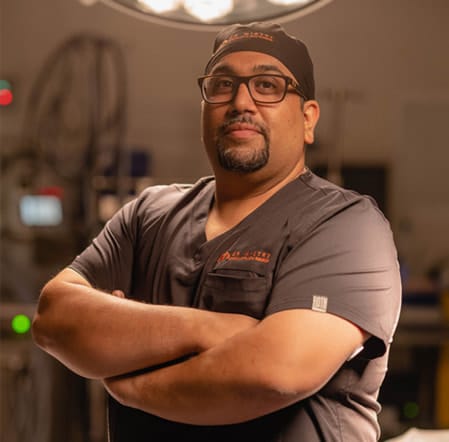
Dr Yezdi Mistry is a Specialist Plastic and Reconstructive Surgeon based in Newcastle, NSW. With extensive training and experience in both reconstructive and aesthetic surgery, Dr Mistry is committed to providing safe, evidence-based care that is tailored to each patient’s individual needs.
After completing his Fellowship of the Royal Australasian College of Surgeons (FRACS) in Plastic Surgery in 2013, Dr Mistry relocated to Newcastle with his family in 2015. He began his work as a Visiting Medical Officer (VMO) in Plastic and Hand Surgery at John Hunter Hospital before establishing his private practice in 2017. His practice offers a comprehensive range of reconstructive and aesthetic procedures for the breast, body, face, and skin.
Dr Mistry’s approach to patient care is grounded in trust, respect, and open communication. From initial consultation to recovery, he aims to ensure patients feel informed, supported, and comfortable throughout their surgical journey. He is dedicated to maintaining the highest professional and ethical standards in all aspects of his work.
To remain at the forefront of modern surgical techniques, Dr Mistry continues to pursue ongoing professional development both in Australia and internationally. He was Australia’s first delegate at the Body Contouring Academy in Paris, where he received advanced training in body contouring and skin-tightening techniques, including VASER and RENUVION technologies.
Fill in your details and our friendly team will be in touch with you
Please Note: Information provided on Dr Mistry’s website is provided as a basic guide, it does not constitute a diagnosis and should not be taken as medical advice. Any surgical or invasive procedure carries risks.



“I care because it’s my job as a surgeon, as a plastic surgeon, to do the appropriate thing and to give you a good outcome. I want to leave knowing that I can tell a patient, hand on heart, that I did the very best I could and that I looked after them, so when I see them post op later that day or the next morning, that they feel they were in good hands.”
– Dr Yezdi Mistry
Request a Consult
