Home / Body / Abdominoplasty Recovery Guide: What to Expect After Surgery in Newcastle
Abdominoplasty Recovery Guide Newcastle
Essential Aftercare Tips and Timelines for Tummy Tuck Patients
Choosing to undergo an abdominoplasty is a deeply personal transformation, but the most crucial work happens long after you leave the operating room. Here in Newcastle, we know that achieving the beautiful, lasting results you desire relies on a strong foundation of proper aftercare, rest, and patience. Whether you are carefully preparing for your upcoming surgery or are already navigating those critical first days of healing, this guide breaks down exactly what you need to know. By understanding your recovery timeline and following our dedicated advice, you can ensure a safe, smooth, and highly confident journey as you embrace your new contours and comfortably return to your daily routine.
Recovery after abdominoplasty or tummy tuck is a gradual process that involves wound healing, swelling reduction, movement restrictions, garment use and follow-up care. The recovery experience can vary depending on the extent of surgery, whether abdominal muscle repair was performed, your general health and how your body heals.
Dr Yezdi Mistry, Specialist Plastic and Reconstructive Surgeon in Charlestown, NSW, provides individualised recovery instructions for each patient. This guide explains what many patients can generally expect after abdominoplasty, while recognising that your own recovery plan should always come from your treating surgeon.
Abdominoplasty is a significant surgical procedure. It’s important to allow time for rest, attend follow-up appointments, avoid rushing activity, and contact Dr Mistry’s team if you’re unsure about any symptom during recovery.
Abdominoplasty Recovery at a Glance
Gentle walking Usually encouraged early, as advised
Help at home Often needed during early recovery
Driving Only when comfortable, off sedating pain medicine and cleared
Desk-based work Depends on healing, comfort and job demands
Physical work Usually requires a longer recovery plan
Exercise Gradual return under surgical guidance
Scar maturation Often continues for 12 months or longer
Most patients should expect the first one to two weeks to involve reduced mobility, abdominal tightness, swelling, bruising and the need for practical support at home. Walking is usually encouraged early, but bending, lifting, driving and exercise are restricted until your surgeon advises otherwise.
Recovery is not only about the incision healing. It also involves the deeper tissues settling, swelling gradually reducing and scars maturing over several months.
These timeframes are general only. Dr Yezdi Mistry will provide recovery guidance based on your procedure, healing progress and follow-up assessments at his Charlestown clinic.
What Is Abdominoplasty Recovery Like?
Abdominoplasty recovery usually begins with rest, reduced movement and close attention to wound care. In the early days, it’s common to feel tightness across the abdomen, especially when standing upright, because the skin and underlying tissues have been adjusted during surgery.
Some patients may also have drains, dressings and a surgical support garment. These are used to support healing and help manage fluid and swelling, depending on the details of the operation.
As recovery progresses, most people gradually move from assisted walking and limited activity to more independent daily routines. It’s important not to compare your recovery with another person’s experience, as healing can differ from patient to patient.
How Long Does Recovery After Abdominoplasty Take?
Recovery after abdominoplasty/tummy tuck usually happens in stages rather than on one fixed timeline. Early recovery often takes several weeks, while swelling, scar maturation and changes in abdominal sensation can continue for months.
The first few days are usually focused on rest, pain control, short walks and monitoring for any concerns.
The first few weeks often involve reduced activity, garment use and gradual improvement in posture and mobility.
Return to work depends on your occupation, whether your role is desk-based or physical, and how your recovery is progressing.
Strenuous activity, abdominal exercises and heavy lifting need to wait until Dr Mistry provides clearance.
Scars and tissue firmness can continue changing for 12 months or longer.
A realistic recovery plan should allow for gradual improvement, not a rushed return to usual activity.
What Is the Week-by-Week Abdominoplasty Recovery Timeline?
A week-by-week recovery timeline can help you understand what may happen after abdominoplasty, but it should not replace the instructions provided by Dr Mistry. Your timeline may differ depending on your procedure, your health, and whether muscle repair or additional procedures were performed.
Days 1–3: Rest, assisted movement and monitoring
You’ll usually need help with getting in and out of bed, moving around the home and managing medications. Short, gentle walks may be encouraged to support circulation.
Week 1: Early wound care and limited activity
Swelling, bruising, tightness and fatigue are common. You may need to walk slightly bent forward to reduce tension across the abdomen.
Weeks 2–3: Gradual mobility improvements
Some patients begin standing more upright and moving more comfortably. Activity is still restricted, and lifting should be avoided unless Dr Mistry advises otherwise.
Weeks 4–6: Increasing daily activity
Many patients can do more routine daily tasks, depending on healing. Exercise and physically demanding work still require surgeon guidance.
Months 2–12: Longer-term healing and scar maturation
Swelling may continue to fluctuate, sensation may gradually change, and scars typically continue to mature over time.
This staged approach helps patients understand that abdominoplasty recovery is measured in weeks and months, not just days.
How Should I Prepare My Home Before Surgery?
Preparing your home before abdominoplasty can make early recovery more manageable. The goal is to reduce unnecessary movement, avoid strain and make it easier to rest during the first stage of healing.
Arrange help with children, pets, groceries, driving and household tasks.
Prepare meals or easy food options before surgery.
Set up a sleeping area with pillows to support your back and knees.
Place medications, water, phone chargers and essentials within easy reach.
Choose loose, front-opening or easy-to-wear clothing.
Good preparation can reduce stress during the early recovery period and help you focus on following your postoperative instructions.
How Should I Sleep After Abdominoplasty?
After abdominoplasty, sleeping on your back with your upper body and knees supported is commonly recommended to reduce tension across the abdominal incision. Dr Mistry will advise you on positioning based on your procedure and comfort.
Use pillows behind your back to keep your upper body slightly elevated.
Place a pillow under your knees to reduce pulling across the abdomen.
Avoid sleeping on your stomach during early recovery.
Keep essentials nearby so you don’t need to twist or stretch.
Ask for help getting in and out of bed if movement is difficult.
A supported sleeping position can make rest more comfortable and may help reduce strain while the abdomen heals.
Will I Have Drains After Abdominoplasty?
Some patients have drains after abdominoplasty, while others may not. Drains may be used to help remove fluid from the surgical area during the early healing phase.
Drains are usually monitored by measuring the amount of fluid collected.
You’ll be shown how to manage them if you go home with drains in place.
Drain removal timing depends on fluid output and Dr Mistry’s assessment.
It’s important not to pull, twist or disconnect drains.
Contact Dr Mistry’s team if there’s sudden increased fluid, unusual colour, odour or pain around the drain site.
If drains are part of your recovery plan, Dr Mistry’s team will explain how to care for them and when they may be removed.
What Garment Will I Need After Abdominoplasty?
A surgical support garment is commonly used after abdominoplasty to support the abdominal area and assist with swelling management. The type of garment and how long it is worn will depend on Dr Mistry’s postoperative instructions.
The garment should feel supportive but not painfully tight.
It may need to be worn day and night during the early recovery period.
You’ll need to keep the garment clean and dry according to instructions.
Avoid folding or bunching that may place pressure on the incision.
Report rubbing, skin irritation or discomfort at your follow-up appointment.
A correctly fitted garment can support early recovery, but it should always be used as directed by your surgical team.
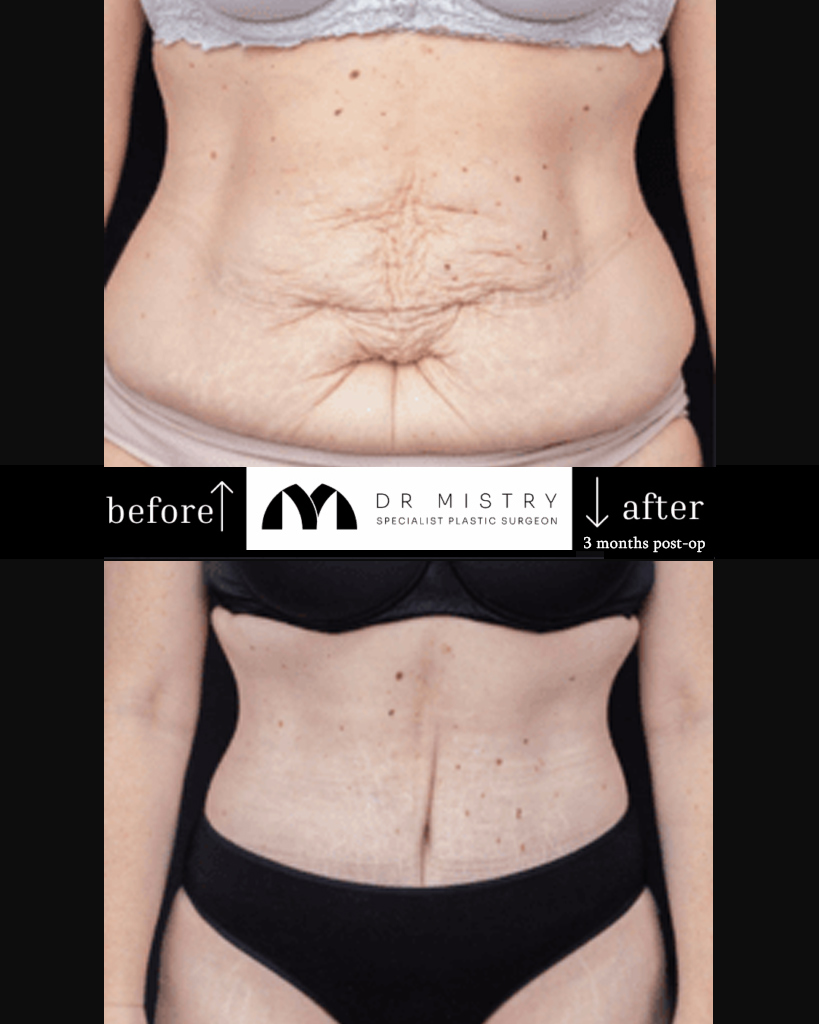
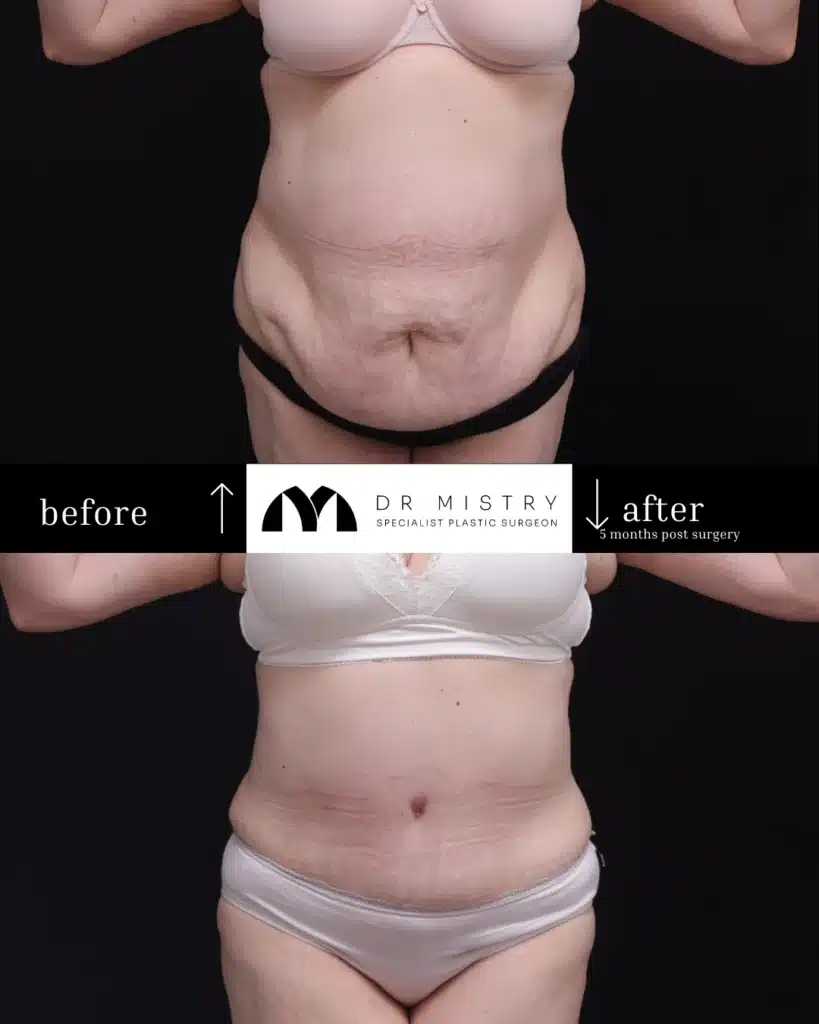
Extended Liposuction Abdominoplasty Before and After Photos
How Long Does Swelling Last After Abdominoplasty?
Swelling after abdominoplasty is expected and may take months to gradually settle. It can fluctuate during the day and may feel more noticeable after activity, heat or prolonged standing.
Early swelling is usually most noticeable in the first few weeks.
Some firmness or tightness can persist as tissues heal.
Swelling may not reduce evenly on both sides at the same pace.
Garment use and activity restrictions may help manage swelling.
Sudden, painful or one-sided swelling should be reviewed promptly.
Swelling is part of the normal healing process, but any sudden change should be discussed with Dr Mistry’s team.
What Bruising, Tightness or Numbness Is Expected?
Bruising, tightness and altered sensation can occur after abdominoplasty. These symptoms usually improve gradually, although numbness or sensitivity changes may take longer to settle.
Bruising is often most noticeable in the early weeks.
Tightness can be felt when standing, walking or changing position.
Some numbness around the lower abdomen or incision area is common.
Sensation may return gradually, but it can feel different during healing.
Increasing pain, spreading redness or sudden swelling should be reviewed.
These changes are usually part of healing, but Dr Mistry’s team should assess any symptom that feels unusual or is worsening.
How Are Abdominoplasty Scars Managed?
Abdominoplasty leaves a surgical scar, and scar care is an important part of recovery. Scar appearance changes over time, and maturation commonly continues for many months.
Follow Dr Mistry’s wound care instructions before starting scar treatments.
Silicone gel or silicone tape may be recommended once the incision has healed.
Protect scars from sun exposure to reduce pigmentation changes.
Scar massage should only begin if Dr Mistry advises it’s appropriate.
Avoid clothing or garments that rub directly on healing incisions.
Consistent scar care and follow-up review can help monitor healing and identify concerns early.
When Can I Return to Work After Abdominoplasty?
Return to work depends on your recovery, the type of work you do and whether your role involves lifting, bending, driving or prolonged standing. Desk-based work may be possible earlier than physical work, but this should be planned with Dr Mistry.
Office-based duties may require less recovery time than manual labour.
Physically demanding roles usually need a longer staged return.
Fatigue can continue even after pain has improved.
Work involving lifting, pushing or carrying should be avoided until cleared.
Medical certificates and work restrictions can be discussed during follow-up.
A safe return to work should be based on healing progress, not a fixed calendar date.
When Can I Drive After Abdominoplasty?
You should not drive until you can move comfortably, react safely and are no longer taking sedating pain medication. Dr Mistry will advise when driving may be appropriate for your situation.
You need to be able to brake suddenly without hesitation.
You should be able to turn your body and check blind spots comfortably.
Seatbelt pressure should not cause significant discomfort.
Pain medication must not impair alertness or reaction time.
You should feel confident entering and exiting the car without strain.
Driving too early can place you and others at risk, so it’s important to wait until you’re physically ready and medically cleared.
When Can I Exercise After Abdominoplasty?
Exercise after abdominoplasty should restart gradually and only according to your postoperative instructions. Walking is usually introduced early, while strenuous activity and abdominal exercises require a longer recovery period.
Short walks may be encouraged early to support circulation.
Avoid heavy lifting, running and high-impact activity until cleared.
Abdominal exercises should not restart without Dr Mistry’s approval.
Swimming should wait until wounds are fully healed.
Increase activity slowly and stop if pain, pulling or swelling increases.
A staged return to exercise helps reduce strain on healing tissues and supports a more controlled recovery.
What Should I Eat During Recovery?
Nutrition can support wound healing, energy levels and bowel function after surgery. A balanced diet, hydration and fibre are especially important while activity levels are reduced.
Include protein-rich foods to support tissue repair.
Drink adequate water unless advised otherwise.
Eat fibre-containing foods to help reduce constipation.
Limit alcohol while taking pain medicine or antibiotics.
Follow any specific dietary advice from Dr Mistry or your GP.
Good nutrition cannot replace surgical aftercare, but it can support your body during the healing process.
What Can Affect Abdominoplasty Recovery?
Several factors can influence how you recover after abdominoplasty. These include your health before surgery, the extent of the procedure and how closely postoperative instructions are followed.
Smoking or vaping can affect wound healing and increase surgical risk.
Diabetes, some medications and certain medical conditions may influence recovery.
Muscle repair or more extensive surgery may require longer restrictions.
Higher activity levels too soon can increase swelling or strain.
Attending follow-up appointments helps Dr Mistry monitor healing.
Understanding these factors helps set realistic expectations and supports a more individualised recovery plan.
What Symptoms Should Prompt Medical Review?
Some discomfort, swelling and bruising are expected after abdominoplasty, but certain symptoms should be reviewed promptly. Contact Dr Mistry’s team or seek urgent medical care if symptoms are sudden, severe or worsening.
Fever, chills or feeling increasingly unwell.
Increasing redness, warmth, swelling or discharge around the incision.
Heavy bleeding or wound separation.
Shortness of breath, chest pain or sudden dizziness.
Calf pain, one-sided leg swelling or sudden severe abdominal pain.
It’s always better to ask for advice early if you’re uncertain about a symptom during recovery.
How Does Dr Yezdi Mistry Support Recovery in Charlestown?
Dr Yezdi Mistry, Specialist Plastic and Reconstructive Surgeon in Charlestown, NSW, provides personalised postoperative care based on the procedure performed and each patient’s recovery progress. Follow-up appointments are used to review wounds, swelling, comfort, activity levels and any concerns.
Recovery instructions are tailored to the details of your surgery.
Follow-up reviews help monitor healing and guide activity progression.
Dr Mistry’s team can advise on garments, wounds, drains and scar care.
Concerns can be assessed early rather than left to worsen.
Patients receive guidance on returning to work, driving and exercise.
For advice specific to your circumstances, contact Dr Yezdi Mistry’s Charlestown clinic to arrange a consultation or postoperative review.
Download Dr Mistry’s Excess Skin Surgery Guide
×
Get Your Ultimate Excess Skin Surgery Guide
Make an Enquiry Today
FAQs About Abdominoplasty Recovery
Why does my abdomen feel tight after abdominal surgery?
Tightness can occur because the abdominal skin and deeper tissues are healing after surgery. It often improves gradually, but worsening tightness or pain should be discussed with Dr Mistry’s team.
Why do I feel more swollen at the end of the day?
Swelling can fluctuate with activity, posture, heat and time spent standing. If swelling becomes sudden, painful or one-sided, contact Dr Mistry’s Charlestown clinic.
Why do I feel tired even when I’m not doing much?
Fatigue is common after surgery because your body is using energy for healing. Rest, hydration, nutrition and gradual activity are important during this stage.
Can I cough or sneeze after abdominoplasty?
Coughing or sneezing can feel uncomfortable because it activates the abdominal area. Supporting your abdomen with a pillow may help, but ongoing coughing should be reviewed.
Why does my incision area feel numb or different?
Altered sensation can occur when small sensory nerves are affected during surgery. Sensation may gradually change over months, although some areas can take longer to settle.
Can constipation affect abdominoplasty recovery?
Constipation can increase abdominal pressure and discomfort after surgery. Hydration, fibre, gentle walking and medication advice from your care team can help manage this.
Why do I need follow-up appointments if I feel well?
Follow-up appointments allow Dr Yezdi Mistry to assess wound healing, swelling, garments, scars and activity progression. Some concerns are easier to manage when identified early.
Patient satisfaction following abdominoplasty: an NHS experience – Journal of Plastic, Reconstructive & Aesthetic Surgery – https://pubmed.ncbi.nlm.nih.gov/17126270/
Take The Next Steps Towards Proper Abdominoplasty Recovery with Dr Mistry
Abdominoplasty recovery requires planning, patience and realistic expectations. While many patients gradually return to daily activities over several weeks, deeper healing, swelling reduction and scar maturation can continue for months.
Recovery varies between individuals.
Surgical instructions should be followed closely.
Activity should increase gradually, not suddenly.
Follow-up care is an important part of recovery.
Any concerning symptom should be reviewed promptly.
To discuss abdominoplasty recovery in more detail, contact Dr Yezdi Mistry, Specialist Plastic and Reconstructive Surgeon in Charlestown, NSW, to arrange a consultation.
Fill in your details and our friendly team will be in touch with you
Please Note: Information provided on Dr Mistry’s website is provided as a basic guide, it does not constitute a diagnosis and should not be taken as medical advice. Any surgical or invasive procedure carries risks.
A Newcastle Surgeon That Cares
“I care because it’s my job as a surgeon, as a plastic surgeon, to do the appropriate thing and to give you a good outcome. I want to leave knowing that I can tell a patient, hand on heart, that I did the very best I could and that I looked after them, so when I see them post op later that day or the next morning, that they feel they were in good hands.”