

It is natural to experience a degree of anxiety before any surgical procedure, especially when it involves a decision as personal as plastic surgery. Whether you are considering breast reduction or another form of reconstructive or aesthetic surgery, feeling nervous beforehand is a normal human response. Understanding what causes this anxiety and how to manage it effectively can make the experience more comfortable and well-supported.
At his practice in Charlestown, Newcastle NSW, Specialist Plastic and Reconstructive Surgeon Dr Yezdi Mistry recognises that emotional preparation is as important as physical readiness. His approach emphasises education, open communication, and evidence-based strategies to help patients navigate the preoperative period with clarity and reassurance.
Understanding Pre-Surgical Anxiety
Pre-surgical anxiety refers to the feelings of unease, nervousness, or apprehension that can arise when planning for a medical or surgical procedure. These emotions are common and can affect anyone, regardless of previous surgical experience. The reasons vary – for some, it relates to concerns about recovery; for others, it stems from uncertainty about the procedure itself or how their body will respond.
Anxiety before surgery can manifest both physically and emotionally. Some individuals may notice increased heart rate, restlessness, or changes in sleep and appetite, while others worry about outcomes or the unknown aspects of the process. Recognising these reactions as normal responses to anticipation is an important first step in managing them effectively.
At Dr Mistry’s Charlestown practice, patients are encouraged to express their questions and concerns openly. The consultation process provides a safe space for discussion, allowing patients to understand what to expect from surgery, recovery, and postoperative care – all of which help reduce uncertainty and anxiety.
Are you Ready for Plastic Surgery? Take Our Quiz
Why Anxiety Occurs Before Plastic Surgery
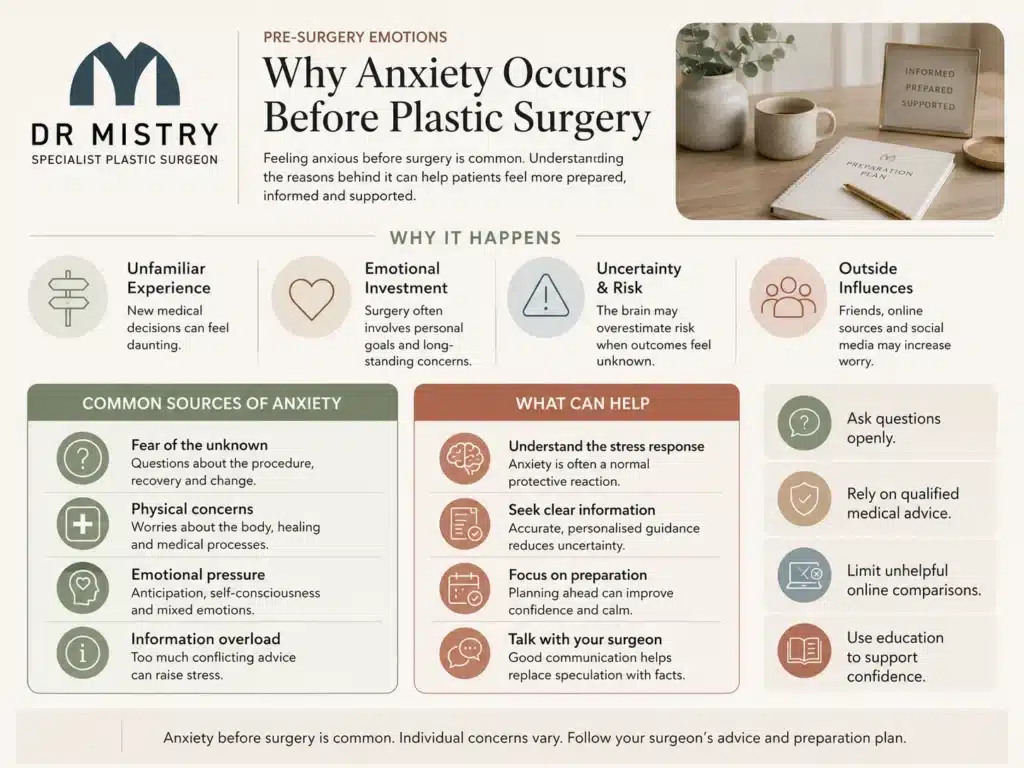
Anxiety often arises when individuals face unfamiliar circumstances or decisions that feel deeply personal. Undergoing plastic surgery can involve both physical and emotional considerations, and it is common for patients to experience a mix of anticipation, uncertainty, and excitement before a procedure. Many people considering surgery have lived with long-standing physical discomfort, self-consciousness, or concerns that have influenced their confidence and daily life. Even when the decision feels right, the prospect of change can still bring mixed emotions.
There is also a cognitive component to pre-surgical anxiety. The human brain tends to overestimate risk when faced with uncertainty, particularly in situations that involve the body and health. This anticipation triggers physiological responses – an ancient mechanism designed to prepare us for potential challenges. Understanding that this is a normal stress response can help patients frame their feelings as protective rather than problematic.
External factors can also influence anxiety levels. Information gathered from friends, online sources, or social media may not always be accurate or contextually appropriate. Clear communication with a qualified surgeon helps replace speculation with factual, personalised information. At Dr Mistry’s clinic, education is prioritised so patients can focus on preparation rather than fear.
The Importance of Communication With Your Surgeon
Open communication between the patient and the surgeon is one of the most effective ways to reduce preoperative anxiety. During consultation, Dr Mistry encourages detailed discussion about the patient’s goals, medical history, and expectations. This process helps identify any areas of uncertainty early and allows time to address them in an informative and structured way.
Many patients find that understanding the step-by-step process of surgery and recovery significantly reduces fear of the unknown. When patients learn about the nature of anaesthesia, pain management, and postoperative care, they often feel more confident about what lies ahead. The emphasis is not only on the physical procedure but also on building trust through transparency.
In addition to clear explanations, Dr Mistry’s approach includes discussing potential risks and expected healing timelines in balanced, realistic terms. This openness fosters confidence and ensures that patients make informed decisions grounded in medical understanding rather than anxiety or misinformation.
Practical Strategies to Reduce Pre-Surgical Anxiety
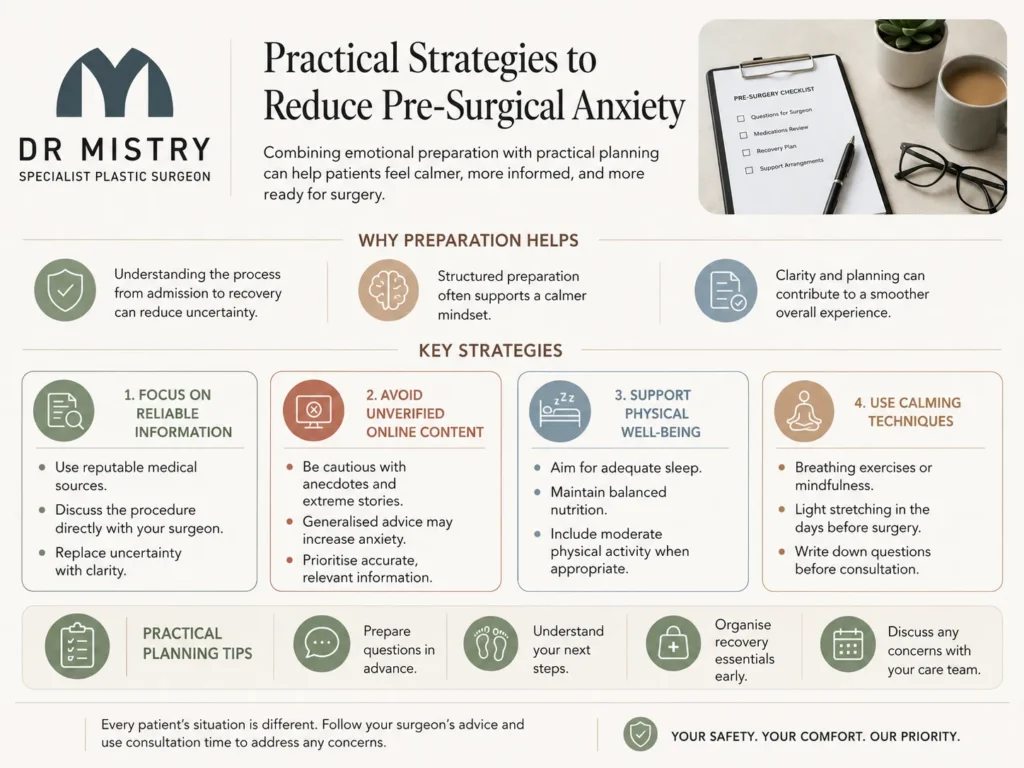
Reducing anxiety before surgery involves combining emotional preparation with practical planning. Understanding the upcoming steps, from admission to recovery, can transform apprehension into readiness. Many individuals find that structured preparation contributes to a calmer mindset and a smoother overall experience.
One effective strategy is to focus on reliable information rather than generalised advice or online anecdotes. Reading about the specific procedure on reputable medical websites or discussing details directly with your surgeon helps replace uncertainty with clarity. Avoiding unverified online content, which often emphasises extremes, is equally important.
Physical well-being also supports mental calm. Adequate sleep, balanced nutrition, and moderate physical activity all influence the body’s stress response. Breathing exercises, mindfulness, or light stretching in the days before surgery can help reduce physiological tension. Some patients benefit from writing down their questions or thoughts before consultation – a simple way to bring structure to what can feel like a complex process.
The Role of Emotional Support and Mindset
Emotional support plays a central role in surgical readiness. Many people find comfort in sharing their plans with trusted friends, family members, or partners who provide reassurance and practical help during recovery. A supportive environment allows patients to focus on their health rather than managing logistics or external stressors.
Psychological preparation also involves mindset. Viewing surgery as a structured, medically guided process – rather than an event to fear – helps reframe anxiety into manageable anticipation. Patients who approach their procedure with realistic expectations and confidence in their care team generally report smoother experiences both emotionally and physically.
At Dr Mistry’s practice, every patient receives comprehensive preoperative guidance. This includes discussing recovery phases, reviewing wound care and activity timelines, and explaining when to expect specific milestones. Clear communication reduces uncertainty and reinforces the sense of being supported throughout the entire surgical journey.
When to Seek Professional Support
While mild anxiety is normal before surgery, some individuals experience heightened worry that affects sleep, concentration, or decision-making. In such cases, professional support from a psychologist or counsellor can be helpful. Cognitive behavioural techniques, mindfulness strategies, or brief preoperative counselling sessions have all been shown to reduce anxiety in medical patients.
Dr Mistry encourages patients to take a holistic approach to their care, which includes addressing emotional well-being. Working collaboratively with other healthcare professionals supports a more positive and stable surgical experience. Patients who enter surgery feeling mentally prepared are better positioned to manage the physical aspects of recovery calmly and effectively.
If anxiety becomes overwhelming or persists despite reassurance, seeking additional professional input is a constructive step. Emotional well-being is an integral part of comprehensive medical care, and addressing it early ensures that the entire surgical experience – from consultation to recovery- is well-supported.
Managing Anxiety and Emotional Well-being Before Surgery FAQs
Why do I feel more anxious after booking my surgery, even though I was confident before?
It is very common for anxiety to increase once a date is confirmed because anticipation becomes real and the brain naturally prepares for change. This reaction reflects the body’s built-in alert system, not doubt about your decision. Focusing on structured preparation and reviewing what to expect can help restore a sense of calm.
Can reading about other people’s experiences online increase anxiety before surgery?
Yes, personal stories online often reflect individual experiences that may not apply to your situation. These accounts can unintentionally heighten worry by focusing on extreme or emotional outcomes. Relying on information from your surgeon or recognised medical sources provides context and helps reduce unnecessary stress.
Is it normal to feel emotional when discussing my body during a consultation?
Absolutely. Talking about body-related concerns, particularly when they have affected comfort or wellbeing for years, can bring up strong emotions. Dr Mistry provides a supportive environment where patients can express these feelings freely, recognising that emotional processing is part of preparing for surgery.
How can I manage anxiety the night before my procedure?
Preparing simple, calming routines can be very helpful – such as packing hospital items in advance, limiting online activity, and practising deep breathing. Light reading, music, or gentle stretching can distract from worry and support rest. Most patients find that focusing on practical readiness helps reduce racing thoughts.
Can anxiety affect how I recover after surgery?
Studies suggest that high anxiety may influence perceived pain levels and sleep quality after surgery. Managing stress before the procedure supports smoother recovery and more stable energy levels. Emotional preparation is therefore an important part of surgical readiness, not just physical fitness.
Why do some people feel anxious about anaesthesia even after reassurance?
Anxiety about anaesthesia is common because it involves a temporary loss of control. Understanding the process, including how the anaesthetist monitors safety throughout, can make this aspect feel less abstract. During preoperative discussions, Dr Mistry explains each stage clearly so patients feel informed and supported.
Can relaxation techniques really make a difference before surgery?
Yes, even brief relaxation exercises can lower heart rate, steady breathing, and reduce circulating stress hormones. Techniques such as mindfulness, guided imagery, or controlled breathing have measurable physiological benefits. Many patients use these methods in the days leading up to surgery to maintain calm focus.
What role does trust in my surgeon play in reducing anxiety?
Trust is central to reducing pre-surgical anxiety. When patients feel confident that their surgeon listens, explains, and prioritises safety, it lessens uncertainty and fosters calm. Dr Mistry’s emphasis on communication and transparency helps build this confidence naturally during consultation.
Can preparing my home environment before surgery help with emotional well-being?
Yes, planning your recovery space – arranging comfortable clothing, meals, and support – provides a sense of control and readiness. Knowing that practical details are taken care of allows your attention to shift away from worry and towards rest and healing. Many patients find this step surprisingly reassuring.
What if I still feel anxious even after following all the preparation advice?
Persistent anxiety does not mean you are unprepared – it simply reflects that surgery is a significant life event. Discussing your feelings openly with your surgeon or a psychologist can help place them in context. Support and reassurance are part of comprehensive care, and addressing anxiety early promotes both mental and physical well-being.
Medical References
- A Survey of Current Preferences of Plastic Surgeons Regarding the Assessment and Reduction of Preoperative Patient Anxiety / Aesthetic Plastic Surgery / https://pmc.ncbi.nlm.nih.gov/articles/PMC8986481/
- The Psychological Impact of Aesthetic Surgery: A Mini-Review / Aesthetic Surgery Journal Open Forum / https://academic.oup.com/asjopenforum/article/doi/10.1093/asjof/ojac077/6759794
- The Impact of Preoperative Psychological Interventions on Surgical Outcomes: A Systematic Review and Meta-analysis / Plastic and Reconstructive Surgery – Global Open / https://pmc.ncbi.nlm.nih.gov/articles/PMC12023166/
- Pre-Operative Anxiety Among Patients Undergoing Elective Surgery in Northern State, Sudan: A Multi-Center, Cross-Sectional Study / British Journal of Surgery / https://academic.oup.com/bjs/article/112/Supplement_10/znaf128.492/8164576
A Patient-Centred Approach in Charlestown
Surgery is not only a physical procedure but also an emotional journey that involves preparation, trust, and understanding. By combining medical expertise with empathetic communication, Dr Yezdi Mistry ensures that patients feel heard and supported throughout the process. His patient-centred approach is built on clarity, realistic expectation-setting, and ongoing professional guidance.
For patients in Charlestown, Newcastle and the Hunter region, Dr Mistry provides comprehensive assessments and individualised surgical planning. Whether the goal is to reduce discomfort from large breasts or address another concern, every step is informed by evidence-based practice and a commitment to patient well-being.
Reducing anxiety before surgery begins with information, continues through trust, and extends into recovery. By addressing emotional readiness with the same care as physical preparation, patients can approach their surgery with calm assurance and confidence in their care.
Evidence-Based Practice
All medical information shared by Dr Yezdi Mistry is grounded in peer-reviewed research and current surgical guidelines. Each article aligns with the standards of the Royal Australasian College of Surgeons (RACS), the Australian Society of Plastic Surgeons (ASPS), and AHPRA’s advertising regulations to ensure factual, balanced, and medically responsible communication.
Taking the Next Step: A Consultation With Dr Mistry
If you are preparing for plastic surgery and would like to discuss ways to manage pre-surgical anxiety, a consultation with Dr Yezdi Mistry can help. His practice in Charlestown provides a supportive environment focused on patient education, careful preparation, and comprehensive care throughout the surgical journey.
Every consultation includes a detailed discussion of what to expect before, during, and after surgery, with attention to emotional well-being and clinical safety. To arrange an appointment, contact Dr Mistry’s Charlestown practice and take the first step towards a calm, informed surgical experience.
Further Reading
- Read more about Your First Visit at Dr Mistry’s clinic
- Read more about Recovery After Plastic Surgery
- Read more about Plastic Surgery Risks
- Are You Ready for Plastic Surgery? Take Our Quiz