

Blepharoplasty involves surgery to the upper eyelids, lower eyelids, or both. It is often discussed in terms of the procedure itself, but blepharoplasty recovery period is just as important. For many patients, the most practical questions begin after surgery rather than before it. They want to understand when daily movement may feel more comfortable, when longer walks may be appropriate, when the gym may be resumed, and how activities such as yoga, Pilates, running, swimming, and weight training may fit back into routine.
These questions matter because returning to exercise after blepharoplasty is not only about feeling ready. It is also about allowing delicate tissues around the eyes time to heal. Swelling, bruising, tightness, and general sensitivity can all be affected by physical exertion, particularly during the early postoperative stage. Even when the rest of the body feels capable, the eyelids may still be in an active phase of healing.
Dr Yezdi Mistry provides patients in Charlestown, NSW with clear guidance about recovery after blepharoplasty, including how activity is usually reintroduced over time. The focus is on accurate information, realistic expectations, and a gradual return to normal routine. Rather than relying on a single timeline for every patient, the advice is shaped by the type of surgery performed, the healing process, and the individual’s symptoms and activity goals.
All surgical procedures carry risks, and recovery varies between individuals. This article provides general information only. It does not replace personalised medical advice, examination, diagnosis, or follow-up care from a qualified health practitioner.
Why Exercise Needs a Careful Return
The eyelids are delicate structures. The skin is thin, the tissue layers are fine, and the area has a rich blood supply. Following blepharoplasty, the body begins a healing response that includes inflammation, swelling, and tissue repair. During this stage, the eyelids may feel sensitive or tight, and visible bruising or puffiness may be present.
Physical exertion can influence this healing phase in several ways. Exercise may increase heart rate, circulation, and blood pressure. More demanding activity can also raise body temperature, increase facial flushing, and lead to heavier breathing or straining. Around the eyelids, these changes may contribute to increased swelling, a feeling of pressure, or prolonged bruising if activity is resumed too quickly.
This does not mean all movement should stop. Gentle activity may still be appropriate. The aim is not to avoid movement completely, but to avoid forms of exertion that may place unnecessary stress on the healing tissues. In practical terms, there is a difference between moving around the home, taking a short gentle walk, and returning to a full fitness routine. Understanding that difference can help patients approach recovery more steadily.
In the early stage, the focus is generally on supporting healing rather than maintaining performance. A short period of reduced exercise is often part of normal recovery planning. Patients who understand this before surgery are often better prepared for the recovery process afterwards.
The First Few Days of Recovery
The first few days after blepharoplasty are usually centred on rest, light movement, swelling management, and wound care. This is often the stage when swelling and bruising are most noticeable. Some patients describe a feeling of tightness around the eyelids. Others may notice watering, mild dryness, or temporary sensitivity as the area settles.
Although complete bed rest is not usually necessary, this is still considered a protective stage of recovery. The body is working through the early inflammatory phase, and the treated area may respond more easily to physical strain. For this reason, activity is generally kept light and controlled.
During this phase, patients are often advised to focus on:
- gentle movement rather than structured exercise
- avoiding heavy lifting
- limiting repeated bending where possible
- allowing the body time to settle before resuming higher demand activity
This initial period can feel slow for active patients, especially those who are used to daily movement or structured training. However, it often helps to view it as part of the procedure rather than a delay outside it. Blepharoplasty recovery is not only defined by the day of surgery. It also includes the way the weeks afterwards are managed.

Why Some Patients Rush Back Too Soon
It is common for patients to feel physically well before the eyelids are ready for more demanding exercise. Because blepharoplasty is localised to the eye area, it does not usually create the same sense of whole-body fatigue associated with larger procedures. Patients may therefore assume they can return to exercise as soon as they feel generally mobile and comfortable.
This is understandable, but it can be misleading. General energy does not always reflect tissue healing. The eyelids may still be swollen, the incision lines may still be settling, and the tissues may still respond to increases in pressure or exertion. A person may feel capable of resuming routine and still benefit from a slower return to exercise.
There are several common reasons this happens:
- a regular exercise habit is already part of daily life
- the body feels well before the eyelids have fully settled
- blepharoplasty may be perceived as a smaller procedure
- patients may underestimate how responsive the eyelid area can be to exertion
A gradual return is often easier to manage when patients recognise this early. It reduces the urge to test limits too soon and helps align activity with healing rather than impatience.
Are you Ready for Plastic Surgery? Take Our Quiz
Walking Usually Comes First
Walking is often the first type of activity patients ask about after blepharoplasty. In many cases, it is also the first form of structured movement that can be resumed. Walking is accessible, familiar, and easy to adjust. Even so, it is useful to remember that not all walking places the same demand on the body.
A slow walk around the house is very different from a brisk outdoor walk. A short stroll on level ground is different from walking uphill in warm weather. A gentle walk for mobility is not the same as a sustained walk intended for fitness. These differences matter during recovery.
A gradual return to walking is often more practical than treating walking as a single category. Patients may move through stages such as:
- light movement around the home
- short outdoor walks at an easy pace
- gradual increase in distance and duration
- later return to more purposeful walking for exercise
If swelling, pressure, or discomfort increase after a walk, it may suggest that the pace or duration was ahead of the body’s tolerance at that point. Slowing down does not mean recovery is not progressing. It may simply mean the eyelids still need a more measured approach.
For many patients of Dr Yezdi Mistry in Charlestown, NSW, walking becomes a useful bridge between rest and more structured exercise. It supports circulation and routine without necessarily creating the same demands as gym work or sport.
Returning to the Gym
Returning to the gym is often a major milestone for patients who are used to regular training. However, the gym can be more difficult to manage than patients first expect. Even when someone plans to take it easy, the environment itself may encourage more effort than intended. Familiar routines, equipment, group energy, and time pressure can all make it harder to remain conservative.
A treadmill walk may gradually become faster. A light session may turn into a longer workout. Resistance exercises that appear manageable may still involve breath holding, bracing, and effort through the face and upper body. These changes can happen quickly, even when the original intention was to keep things gentle.
The phrase returning to the gym can mean very different things for different patients. For one person, it may mean light treadmill walking and mobility work. For another, it may involve resistance training, circuits, or group classes. That is why it is more helpful to think about the exact type of exercise being resumed rather than the location itself.
Patients are often advised to resume gym-based activity gradually. In practical terms, this may involve returning first to lower intensity activity and delaying more demanding sessions until recovery has progressed further. This staged return is usually more manageable than trying to resume full training all at once.
Weight Training and Resistance Exercise
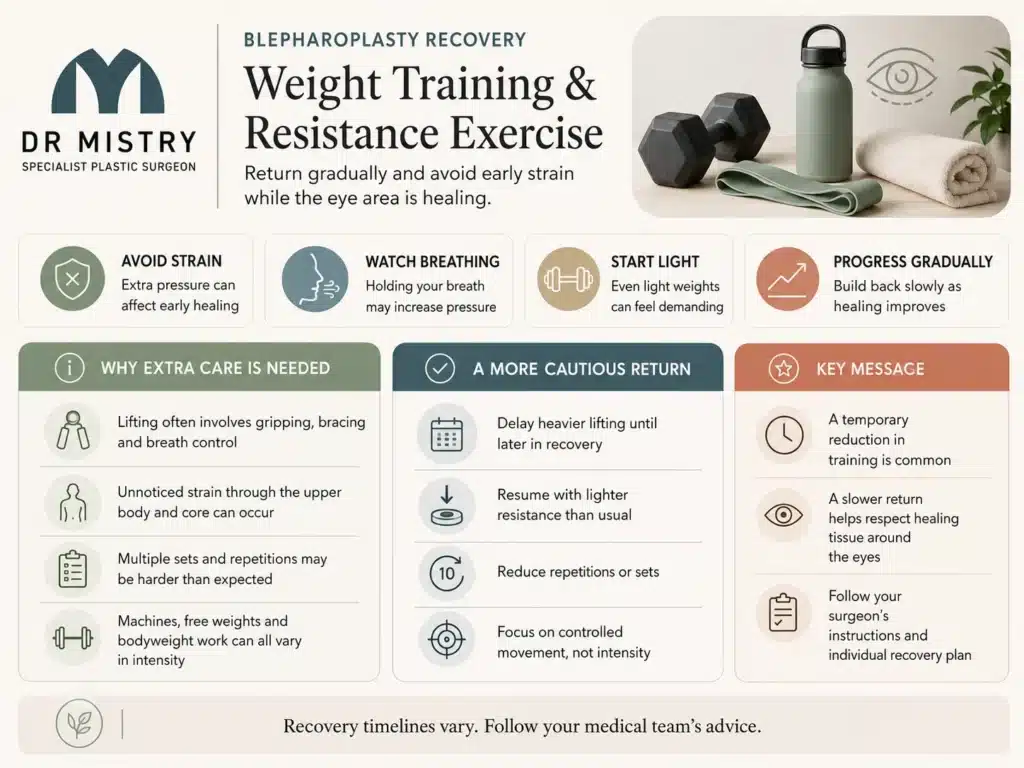
Weight training deserves particular care after blepharoplasty because resistance exercise can place extra demand on the body in ways that are not always obvious. Lifting weights often involves gripping, bracing, and breath control. In some cases, patients may hold their breath or generate strain through the upper body and core without realising how much effort is being used.
These responses can increase pressure and are not always well suited to the earlier phase of recovery. Even lighter weights may become more demanding than expected if multiple sets or repetitions are performed. Machines, free weights, and bodyweight exercises can all vary in their intensity depending on how they are used.
A more cautious reintroduction often works best. This may mean:
- delaying heavier lifting until later in recovery
- resuming with lighter resistance than usual
- reducing the number of repetitions or sets
- focusing on controlled movement rather than intensity
The goal is not to stop strength training indefinitely. It is to reintroduce it at a stage when healing is more established and the treated area is less reactive.
Patients are often reassured by knowing that a temporary reduction in resistance training is common after surgery. A slower return does not mean they are losing progress beyond recovery. It simply reflects the fact that tissue healing around the eyes needs to be respected even when the rest of the body feels ready.
Running and High Intensity Cardio
Running usually places more demand on the body than walking. It involves repeated impact, stronger cardiovascular effort, increased breathing, facial warmth, and often more perspiration. These factors can influence swelling and comfort around the eyes during the healing period.
Some patients notice a sense of fullness, heaviness, or throbbing when they first consider returning to jogging or other higher intensity cardiovascular exercise. Others may feel well during the activity but observe more swelling afterwards. This can indicate that the body is not yet ready for that level of exertion.
Higher intensity cardio may include:
- running
- interval training
- bootcamp sessions
- boxing-based fitness
- circuit-style classes
- high intensity bike or rowing sessions
These activities are not necessarily unsuitable in the longer term, but they are usually not the first steps back after blepharoplasty. A gradual transition from light movement to moderate exercise is often more practical than moving straight into high intensity sessions.
For active patients, a short pause from running or higher intensity cardio may feel frustrating. However, this period can be easier to manage when understood as part of postoperative care rather than a setback. Returning gradually may better support the healing process than pushing too soon and needing to step back again.
Yoga and Pilates After Blepharoplasty
Yoga and Pilates are often perceived as gentle options, but their suitability after blepharoplasty depends on the type of session and the movements involved. Some classes are restorative and low demand, while others involve strong core engagement, prolonged holds, forward bending, and positions where the head is below the level of the heart.
These details matter. Certain positions may create pressure or fullness around the eyes, particularly if swelling is still present. Heated classes can also add another layer of physical demand by increasing body temperature and facial warmth.
Patients considering yoga or Pilates after blepharoplasty may need to think about:
- whether the class is gentle or more demanding
- whether there are inverted or downward positions
- whether the room is heated
- whether the pace can be modified if needed
Some patients may find that light stretching at home is easier to control in the earlier stages than attending a formal class. Others may prefer to delay structured sessions until they can participate without needing frequent adjustments. This is one reason personalised advice remains useful. The answer may differ depending on what the patient actually means when they say yoga or Pilates.
Download Dr Mistry’s Excess Skin Surgery Guide


Swimming and Water-Based Exercise
Swimming is another activity that often seems gentle at first glance, yet it introduces different considerations after eyelid surgery. In addition to physical exertion, there is also the issue of water exposure around the eye area. Pools, ocean water, and goggles may all affect comfort while tissues are still healing.
Swimming and water-based exercise may involve:
- contact with pool chemicals or salt water
- pressure from goggles around the treated area
- increased risk of irritation if the eyes are still sensitive
- difficulty avoiding splashing or rubbing around the eyes afterwards
For these reasons, swimming is often delayed until healing has progressed further and the treating practitioner has advised that it is appropriate to resume. Water aerobics and similar classes may raise similar issues, even when the movement itself seems moderate.
Outdoor conditions can also matter for patients returning to activity in general. Wind, heat, bright sunlight, and dust may affect comfort around the eyes during recovery. This is another reason why a familiar activity may feel different for a period of time after blepharoplasty.
Daily Activities That Still Count as Exertion
Exercise is not the only source of physical strain during recovery. Some patients avoid the gym but remain very active in daily life without realising how much overall demand they are placing on the body. Household tasks, family responsibilities, commuting, and repeated movement throughout the day can all add up.
Examples of hidden exertion may include:
- carrying shopping bags
- lifting children
- vacuuming and cleaning
- changing bedding
- gardening
- climbing stairs repeatedly
- bending often for household chores
These activities may not be thought of as exercise, yet they still involve effort. In some cases, they may contribute to swelling or fatigue just as much as formal exercise. Recovery is often easier when patients consider the total physical load of the day rather than focusing only on workouts.
Planning for this can be helpful. Some patients benefit from arranging temporary support with heavier tasks, especially during the earlier postoperative phase. This does not need to be long term. Even a short period of reduced strain may make recovery more manageable.
Signs You May Need to Slow Down
The body often gives useful feedback when activity is ahead of the healing process. Patients are usually encouraged to notice how the eyelids feel during and after movement rather than relying only on the calendar. A certain amount of fluctuation in swelling can be normal, but a noticeable increase after exertion may suggest the body needs a slower progression.
Possible signs that activity may need to be adjusted include:
- increased swelling after exercise
- a sensation of pressure or fullness
- more tightness around the eyelids
- visible increase in bruising
- discomfort that settles when activity is reduced
These signs do not necessarily indicate a complication. They may simply mean that the current level of exercise is too demanding for that stage of healing. Reducing intensity for a short period may allow the body to settle again.
More significant symptoms should not be ignored. Sudden swelling, increasing pain, changes in vision, or symptoms that feel clearly outside the expected pattern should be assessed promptly by a qualified practitioner. Good postoperative care includes knowing when to slow down and when to seek medical review.
Blepharoplasty Before and After Photos
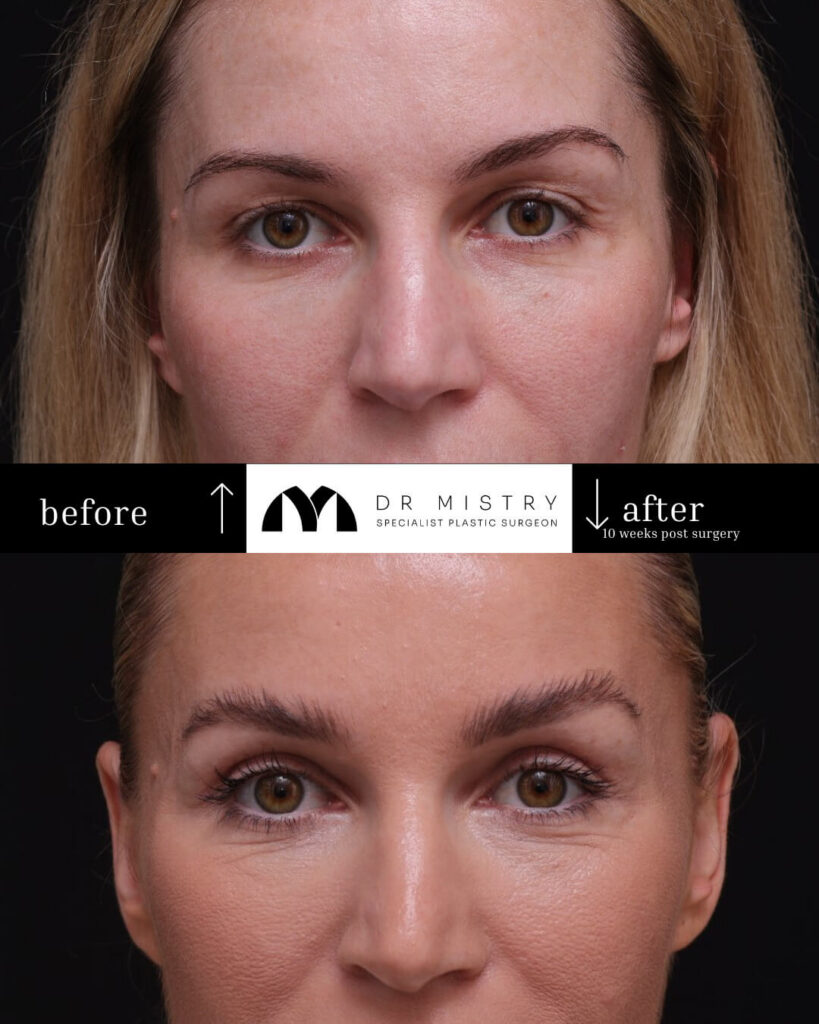
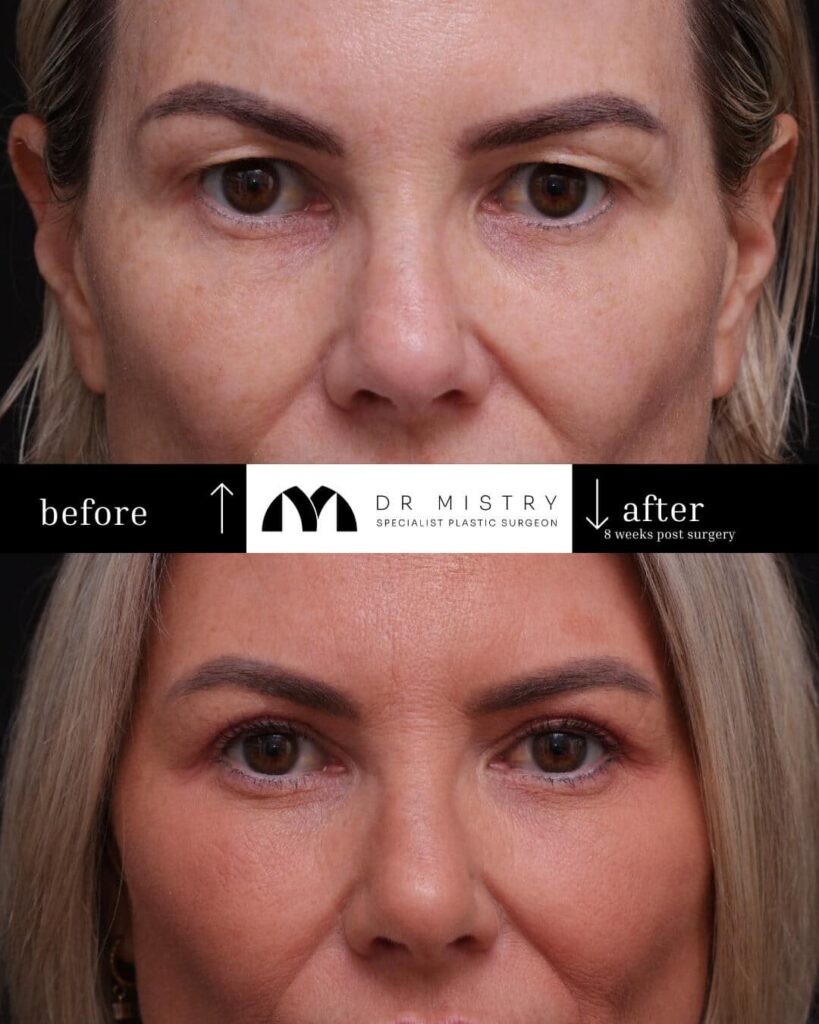
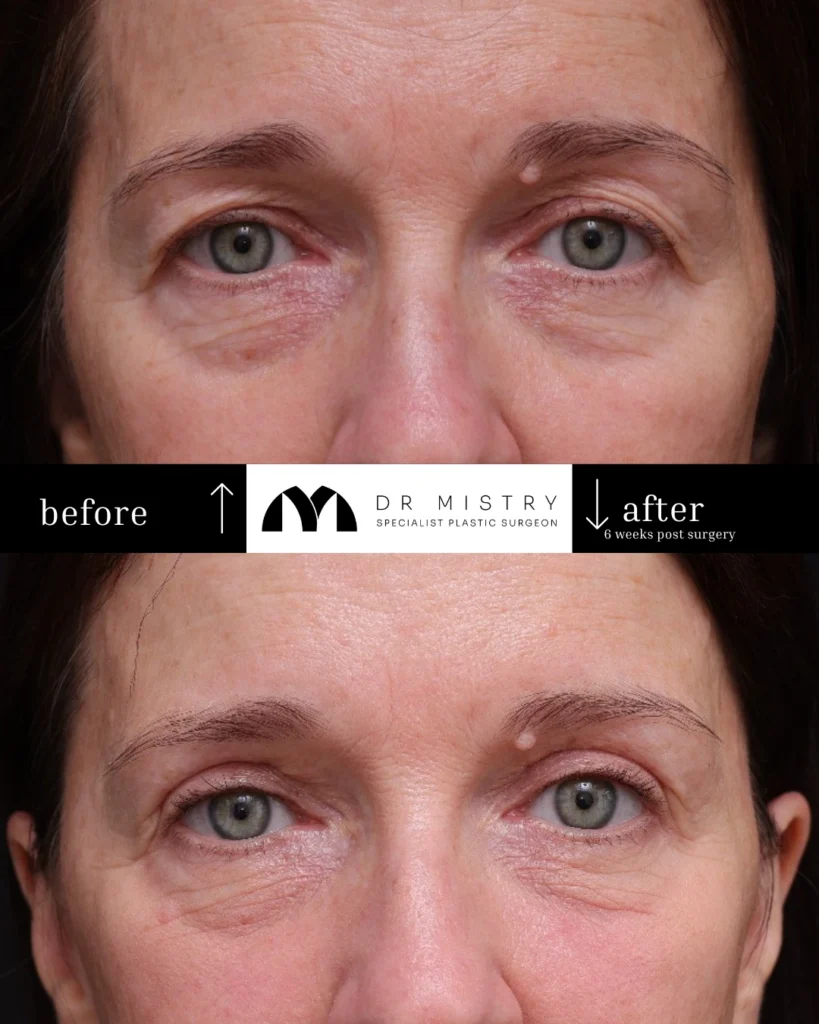
Disclaimer: The outcomes shown are specific to those patients and may not reflect the results experienced by others, as individual outcomes can vary due to a range of factors.
What Affects the Timeline
There is no single exercise timeline that suits every patient after blepharoplasty. Recovery varies for many reasons, and activity recommendations are usually shaped by individual circumstances rather than fixed milestones.
Factors that may influence timing include:
- whether the surgery involved the upper eyelids, lower eyelids, or both
- how extensive the procedure was
- the individual’s healing response
- general health and medical history
- blood pressure and other medical considerations
- tendency toward swelling or bruising
- baseline eye sensitivity or dryness
- the exact type of activity the patient wishes to resume
This is why general online timelines can be of limited value. Broad advice may be useful for context, but it cannot replace assessment of the individual recovery process. Two patients may have the same procedure and still return to activity at different rates depending on how they heal and what type of exercise they want to do.
A Gradual Way Back to Exercise
For many patients, it is helpful to think of exercise recovery in stages rather than looking for one final date when everything returns at once. A staged approach can support better decision-making and may reduce the risk of doing too much too soon.
A practical sequence may look something like this:
- light movement around the home in the early days
- short, easy walks
- gradual increase in daily activity
- return to lower intensity structured exercise
- later reintroduction of more demanding activity
This type of progression allows patients to see how the body responds at each level. If swelling or discomfort increases, the activity can be adjusted before it becomes a larger issue. That flexibility is one reason staged recovery is often easier to manage than an all-at-once return.
For patients who are highly active, this approach can also reduce frustration. It provides a sense of forward movement without requiring the body to jump from rest to full performance.
Why Follow-Up Appointments Matter
Follow-up care plays an important role in guiding recovery after blepharoplasty. These appointments allow Dr Yezdi Mistry to assess healing, monitor progress, and discuss how and when different activities may be resumed. This can be especially useful when a patient has a specific goal, such as returning to resistance training, running, Pilates, swimming, or a physically demanding job.
At follow-up, advice can be based on:
- the appearance of the eyelids
- the condition of the incision lines
- the degree of residual swelling
- the patient’s symptoms
- the type of activity they want to resume
This individualised approach is often more useful than general online advice because it relates directly to the actual recovery process. A patient asking about walking may need different guidance from a patient asking about lap swimming or heavy gym training. Specific questions usually lead to more useful recommendations.
Practical Ways to Support Recovery
Patients often find the recovery period easier when they prepare for a temporary reduction in exercise before surgery. Accepting that activity may need to be reduced for a short period can help avoid frustration and support a more balanced recovery experience.
Helpful strategies may include:
- planning for reduced activity in the early postoperative phase
- arranging assistance with heavier household tasks if needed
- beginning with less activity than feels possible, then increasing gradually
- monitoring swelling and comfort after movement
- asking targeted questions at follow-up about specific exercise goals
A patient does not need to return to every activity at once. In many cases, walking returns first, followed by light structured movement, and then more demanding exercise. This sequence may feel slower than usual routine, but it often aligns more closely with the healing process.
Exercise After Blepharoplasty FAQs
Can facial expressions during exercise affect healing after blepharoplasty?
Strong facial expressions, such as squinting or straining, may contribute to tension around the eyes in the early recovery phase. Patients are generally encouraged to keep facial movement relaxed while healing progresses.
Is it appropriate to exercise if there is still visible bruising?
Visible bruising may still be present while healing continues, and this alone does not determine readiness for exercise. However, increased activity may prolong bruising in some cases, so a gradual approach is often recommended.
Does sleeping position affect readiness to return to exercise?
Sleeping position can influence swelling, particularly in the early stages. Patients who continue to experience morning swelling may benefit from delaying more demanding exercise until this settles further.
Can wearing glasses during exercise impact recovery?
Glasses may place light pressure on the nasal bridge and surrounding areas, but they generally do not interfere with eyelid healing. Comfort should guide whether they are worn during activity in the early stages.
Is it normal for one eyelid to respond differently to exercise than the other?
Mild asymmetry during recovery can occur, as each side may heal at a slightly different pace. Differences in swelling or sensitivity after activity are not uncommon and usually settle over time.
Can screen time combined with exercise affect the eyes?
Extended screen use may contribute to dryness or eye fatigue, particularly during recovery. When combined with exercise, this may increase awareness of eye discomfort, so breaks and lubrication may be helpful if advised.
Does hydration influence swelling after exercise?
Hydration plays a role in overall recovery and may influence how the body manages inflammation. Maintaining adequate fluid intake can support normal healing processes.
Is outdoor exercise different from indoor exercise after blepharoplasty?
Outdoor environments may introduce factors such as wind, sunlight, and dust, which can affect comfort around the eyes. Indoor activity may offer more controlled conditions in the earlier stages.
Can stress or fatigue affect return to exercise?
General fatigue and stress may influence how the body responds to recovery and activity. Patients may find that returning to exercise feels different depending on their overall energy levels.
Should patients avoid exercise if they still feel tightness in the eyelids?
A sensation of tightness can be part of normal healing. If tightness increases with activity, it may indicate that the level of exercise should be adjusted or delayed slightly.
Medical References
- Comprehensive Evaluation of Quality of Life following Upper Eyelid Blepharoplasty: A Prospective Analysis / Medicina, 2024 / https://www.mdpi.com/1648-9144/60/3/500
- Physiotherapy Practice postoperative blepharoplasty: experimental study / Manual Therapy, Posturology & Rehabilitation Journal / https://submission-mtprehabjournal.com/revista/article/view/1049
- Combining early lower eyelid surgery with neuromuscular retraining for synkinesis prevention after facial palsy: the role of theeye in aberrant facial nerve regeneration / Front. Neurol. / https://www.frontiersin.org/journals/neurology/articles/10.3389/fneur.2024.1443591/pdf
Returning to Routine With Realistic Expectations
One of the most useful perspectives after blepharoplasty is that routine usually returns in layers. The first layer is ordinary comfort at home. The next is light movement and daily function. Then comes walking and lower intensity exercise. More demanding training, sport, or gym activity often returns later.
This does not mean recovery is slow or problematic. It simply reflects how the body heals. The appearance of the eyelids may improve before full exercise tolerance is appropriate. Patients who understand this difference are often better able to pace themselves and respond to what the body is doing rather than what they hoped to resume immediately.
For patients of Dr Yezdi Mistry in Charlestown, NSW, returning to exercise after blepharoplasty is approached as part of postoperative care rather than an isolated question. The goal is to support healing, reduce unnecessary disruption, and help patients move back toward their usual activities in a measured and appropriate way.
Final Guidance
Returning to exercise after blepharoplasty usually happens gradually. Light movement may be appropriate earlier, while more demanding activity is often reintroduced in stages. Walking often returns before running. Lower intensity activity generally returns before resistance training or high intensity workouts. Swimming and classes that involve body positions affecting pressure around the eyes may need additional consideration.
Recovery is individual. The pace at which activity can be resumed depends on the type of surgery performed, the healing response, and the physical demands of the exercise itself. A gradual approach often supports the healing process more effectively than an early return to full activity.
Dr Yezdi Mistry, Specialist Plastic Surgeon in Charlestown, NSW, provides patients with tailored postoperative guidance to help them navigate recovery after blepharoplasty. All surgery carries risks, and individual recovery varies. Patients should follow personalised medical advice, attend follow-up appointments, and seek review if they experience symptoms that are unexpected or concerning.
Further Reading
- Read more about Blepharoplasty FAQs
- Read more about What Can Eyelid Surgery Help With?
- Read more about Your First Visit