After blepharoplasty, it is very common for patients to pay close attention to the stitch line. In many cases, the stitches become one of the main visual markers of recovery during the first days after the eyelid surgery. The eyelids are a delicate and highly visible part of the face, so even small changes can seem significant. Mild swelling, a fine pink line along the eyelid crease, or a small amount of crusting near the incision may lead patients to question whether healing is occurring within the expected range.
Dr Yezdi Mistry, Specialist Plastic and Reconstructive Surgeon in Charlestown, NSW, provides patients with information about the postoperative course of blepharoplasty, including how the incision is supported during healing. Understanding what stitches do, how long they may remain in place, and what changes may be seen in the early recovery period can help patients interpret the healing process more accurately and recognise when review may be appropriate.
Blepharoplasty stitches are used to support the incision after eyelid surgery. Once the planned procedure has been completed, the edges of the skin are brought together so that healing can begin. Because eyelid skin is thin, mobile, and subject to constant movement through blinking and facial expression, closure needs to be precise. The method of closure and the type of suture used depend on the surgical plan, the anatomy of the eyelid, and the clinical judgement applied during the procedure.
Patients often ask whether the type of stitch used will determine how the scar looks in the longer term. While stitches are important, they are only one aspect of healing. The final appearance of the incision is influenced by a number of factors, including the design of the incision, tissue handling during surgery, wound tension, postoperative swelling, skin quality, and individual healing characteristics. For that reason, early changes seen around the stitch line should always be interpreted with caution.
Why Stitches Are Used in Eyelid Surgery
In blepharoplasty, the incision is usually placed in a position chosen to follow the natural anatomy of the eyelid. In the upper eyelid, this is often within the natural crease. In the lower eyelid, the location depends on the surgical approach and the reason for the procedure. After the required surgical steps have been completed, the wound edges must be carefully approximated. Stitches are used to support this process and help maintain alignment while the tissue begins to heal.
Wound healing occurs in stages rather than as a single event. In the first phase, the body begins to seal the wound and initiate repair. This is followed by a period of tissue strengthening and later remodelling, during which the scar continues to mature over time. Stitches provide temporary support during the early phase, when the wound is most vulnerable to disruption.
It is important to note that stitches do not simply hold skin together in a mechanical sense. They form part of a broader closure strategy. Surgeons consider the shape of the incision, the degree of tension across the wound, the thickness of the skin, the expected amount of swelling, and the need for follow up when selecting a closure method. In the eyelid, these details matter because the area is both delicate and visible.
For patients, it can be helpful to think of the stitches as temporary support while the body performs the main work less prominent as healing continues of tissue repair. The stitches do not create healing on their own, but they assist the wound while the early stages of repair are taking place. Once the tissue gains enough strength, absorbable sutures may begin to dissolve or non absorbable sutures may be removed.
Dissolving and Removable Stitches: What Is the Difference?
Two broad categories of sutures are commonly used in blepharoplasty. These are absorbable sutures and non absorbable sutures. Both are established options in eyelid surgery, and the choice between them depends on the operative plan and the surgeon’s assessment of what is appropriate for the case.
- Absorbable sutures are designed to gradually break down over time. They may remain visible for a period before softening or dissolving. Some patients notice that these stitches become less prominent as healing continues, although the timing varies depending on the material used and the way the wound is healing.
- Non absorbable sutures do not dissolve. These stitches remain in place until they are removed during a postoperative review. In many cases, this occurs within the first week, although the exact timing depends on the type of closure and the clinical plan for follow up.
The pattern of suturing can also vary. Some incisions are closed with individual interrupted stitches placed at intervals along the wound. Others are closed with a continuous suture that runs along the length of the incision. From a patient perspective, these patterns may look slightly different in the mirror, but their appearance in the early phase does not by itself predict the longer term outcome.
Patients sometimes assume that one type of stitch is more advanced than another. In practice, this is not a useful way to think about wound closure. The more relevant point is that the stitch type is selected as part of an individualised surgical plan. A different closure method does not imply that one patient received a better or worse procedure than another. It reflects the fact that wound closure is adapted to the needs of the individual case.
How the Stitch Line Can Look in the First Few Days
The appearance of the stitch line in the first few days after blepharoplasty can be more noticeable than many patients expect. Even when patients have been prepared for swelling and bruising, the visual detail of a fresh incision can still come as a surprise. The area may appear pink or red, slightly raised, and associated with a small amount of swelling. Some patients also notice light crusting or dried fluid along the wound edge.
These findings can occur as part of the normal early healing process. In the initial postoperative phase, blood flow to the area is increased, tissue fluid may collect around the wound, and the incision is still in an active stage of repair. As a result, the stitch line often looks more prominent at first than it does later on.
Common observations during the first stage of recovery may include:
- mild swelling around the eyelids
- bruising that varies from side to side
- a pink or fine red line along the incision
- slight firmness or elevation near the stitch line
- small amounts of dried fluid or crusting
- a feeling that one eyelid looks more swollen than the other
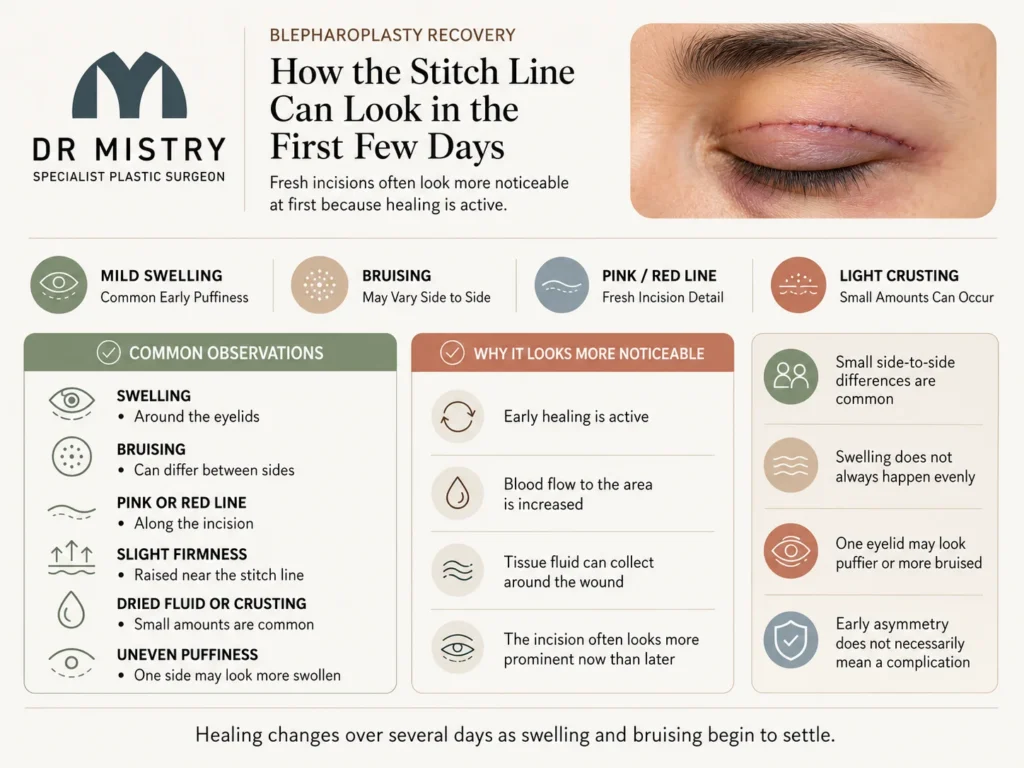
Small differences between the two sides are also common in the early period. Swelling does not always occur evenly, and one eyelid may appear more puffy or more bruised than the other. This may change over several days. Early asymmetry does not necessarily indicate a complication.
It is important to distinguish between the early appearance of a healing wound and the later appearance of a mature scar. The stitch line seen during the first week is still part of an active healing process. It is not the final result of scar remodelling. For that reason, patients are generally advised not to draw conclusions too early about how the incision will settle.
What the Stitches May Feel Like During Recovery
In addition to visible changes, patients often notice different sensations around the eyelids after surgery. Because the eyelids are sensitive and move frequently, even minor changes in the tissues can feel noticeable.
Some of the more common sensations during the early phase may include:
- tightness across the eyelid
- mild tenderness
- a pulling sensation when blinking
- awareness of the stitch line during cleansing
- itchiness as healing progresses
- a sense of stiffness around the incision
These sensations can occur during normal healing. Tightness may relate to swelling and the fact that the skin has been precisely reapproximated. Itchiness can occur as the wound begins to settle. Mild tenderness is also common in the early phase.
Patients may sometimes notice a small knot or tiny segment of suture becoming more visible as swelling reduces. This can happen with either dissolving or removable sutures, depending on the closure technique. A visible thread does not automatically indicate a problem. However, patients are generally advised not to trim, pull, or manipulate the stitch line themselves. If there is uncertainty about the appearance of a stitch, review by the treating team is more appropriate than self treatment at home.
Symptoms should be assessed in context. Mild stitch awareness is different from steadily increasing pain, spreading redness, new discharge, or a feeling that the wound is separating. The overall pattern of healing is more important than any single minor sensation.
When Blepharoplasty Stitches Are Usually Removed or Dissolve
One of the most common questions after blepharoplasty is how long the stitches stay in. The answer depends on the type of suture used and the closure plan selected at surgery.
For non absorbable sutures, removal commonly takes place during an early postoperative review, often within the first week. Some patients may have these removed after several days, while others may have a slightly different timeline depending on the characteristics of the wound and the surgeon’s preference.
For absorbable sutures, the material gradually breaks down over time. These stitches may remain visible for longer before dissolving. The exact timeline varies. Different suture materials dissolve at different rates, and local wound conditions can also influence how long the suture remains noticeable.
Because of this variation, patients are usually best guided by the specific instructions provided by their surgeon or clinic rather than by comparing their experience with general online estimates. Two patients may both have absorbable sutures but notice different timelines in how the stitches look or feel. That variation does not necessarily indicate a problem.
It is also worth noting that the wound may continue to look active even after removable sutures have been taken out. Stitch removal does not mean that healing has finished. It simply means the incision has reached a stage where the external support is no longer required in the same way. The deeper process of tissue repair continues after that point.
Looking After Eyelid Stitches Properly
Postoperative wound care is an important part of the eyelid surgery recovery process. Patients are usually given specific instructions tailored to their surgery, and those directions should be followed carefully. General information can be useful, but the advice provided by the treating clinic remains the most relevant because it reflects the exact closure method used.
General principles of stitch care may include:
- keeping the incision clean as directed
- using prescribed ointments or drops if advised
- avoiding rubbing, pressing, or stretching the eyelids
- attending follow up appointments as scheduled
- following instructions about activity, rest, and return to routine tasks
Patients are often tempted to inspect the wound very closely or to clean away every trace of dried fluid. In most cases, aggressive handling is not helpful. The aim is to maintain a clean and stable environment for the wound rather than to make the incision look fully settled before the tissues are ready. A small amount of crusting can occur during the early stages of healing and does not necessarily indicate a complication.
It is also important to avoid applying unapproved products to the incision. Creams, oils, or home remedies that have not been recommended by the clinic may irritate the area. Because the eyelids are delicate, even seemingly mild products can cause unnecessary sensitivity or interfere with wound care.
Recovery after eyelid surgery also involves more than the wound itself. General measures such as resting appropriately, sleeping with the head elevated if advised, and avoiding activities that place strain on the healing area may form part of the overall postoperative plan. These steps are relevant because swelling and wound tension can influence how the stitch line looks and feels.
What Can Affect Healing and Scar Formation
The final appearance of the eyelid after blepharoplasty is influenced by many factors. While stitches play an important role in early wound support, they are only one part of a wider healing process. Patients who focus only on the suture material may overlook the many other variables that affect how the incision settles over time.
Factors that may influence healing include:
- skin thickness and skin quality
- age and general health
- smoking status
- degree of postoperative swelling
- adherence to postoperative instructions
- wound tension
- environmental exposure, including sunlight
- individual variation in scar formation
Surgical factors also contribute. These include the design and placement of the incision, how the tissues are handled during surgery, and how precisely the wound is closed. All of these elements interact. For that reason, it is not accurate to assume that one single feature, such as the stitch type, will determine the final appearance of the scar.
Healing is also not perfectly linear. Some days the eyelids may look less swollen, while on other days they may appear slightly more puffy, especially in the early phase. A scar may appear more visible before it gradually settles. One side may improve at a slightly different pace from the other. These changes can occur during normal recovery and should be interpreted in the broader context of the individual treatment plan.
Signs That the Clinic Should Review the Area
Most patients move through recovery without significant problems, but there are situations in which review by the treating team is appropriate. Knowing when to seek advice is an important part of postoperative care.
Patients are usually advised to contact the clinic if they notice:
- increasing redness or warmth around the incision
- discharge from the wound
- bleeding that does not settle as instructed
- separation of the wound edges
- swelling that is worsening rather than gradually easing
- increasing pain rather than gradual improvement
- changes in vision
- uncertainty about whether a stitch or wound appearance is within the expected range
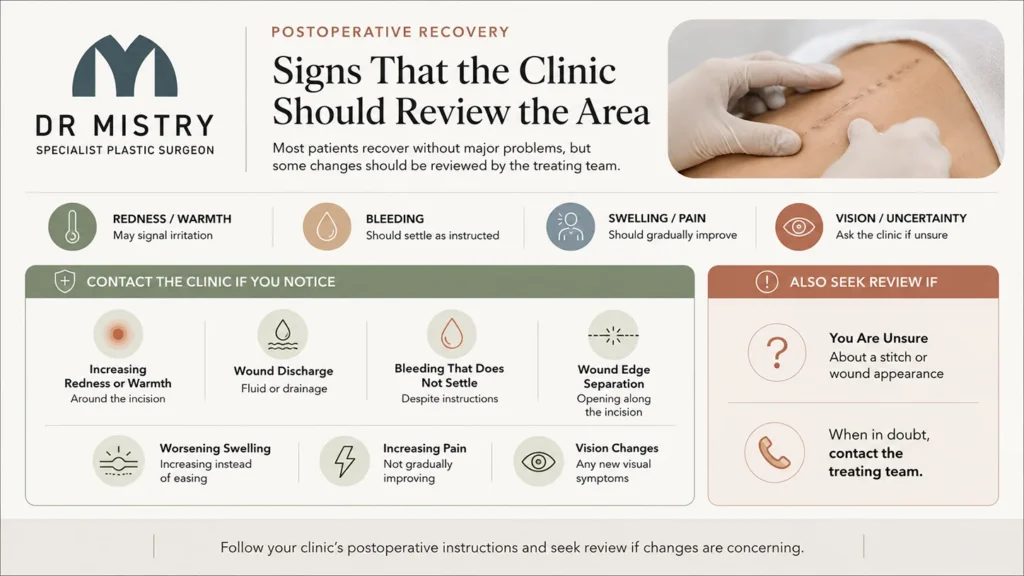
Not every question needs to arise from a serious problem. Sometimes patients simply want to confirm whether a stitch is meant to dissolve, whether a visible thread is expected, or whether a particular ointment should still be used. In these situations, seeking clarification is appropriate. Early communication can help determine whether the wound is progressing within the expected range or whether assessment is needed.
Because the eyes are such an important functional and visible area, patients may feel especially alert to any change after eyelid surgery. This is understandable. Clear follow up instructions and access to review are therefore an important part of the postoperative process.
Why Patients Often Ask So Many Questions About Stitches
Although stitches are only one aspect of blepharoplasty, they are often one of the most visible parts of early recovery. Patients frequently focus on them because they can see them every time they look in the mirror, apply ointment, or cleanse the eyelids. A small visible detail may take on a much larger significance when it is located in such a central area of the face.
Providing accurate information about stitches helps place those early observations into context. It allows patients to understand that some pinkness, swelling, or mild crusting can occur. It clarifies that both dissolving and removable sutures are used in practice. It also reinforces the point that the early stitch line is not the same as the mature scar.
Clear information is especially important in the setting of cosmetic and reconstructive facial surgery, where patients often seek detail about every phase of recovery. A factual explanation does not remove the need for individual clinical advice, but it can support better understanding of what the healing process may involve.
For Dr Yezdi Mistry’s patients in Charlestown, NSW, this type of information forms part of a broader approach to patient education. Careful explanation of the procedure, recovery process, follow up, and areas of uncertainty is an important part of helping patients make informed decisions and understand the postoperative course.
Blepharoplasty Before and After Photos
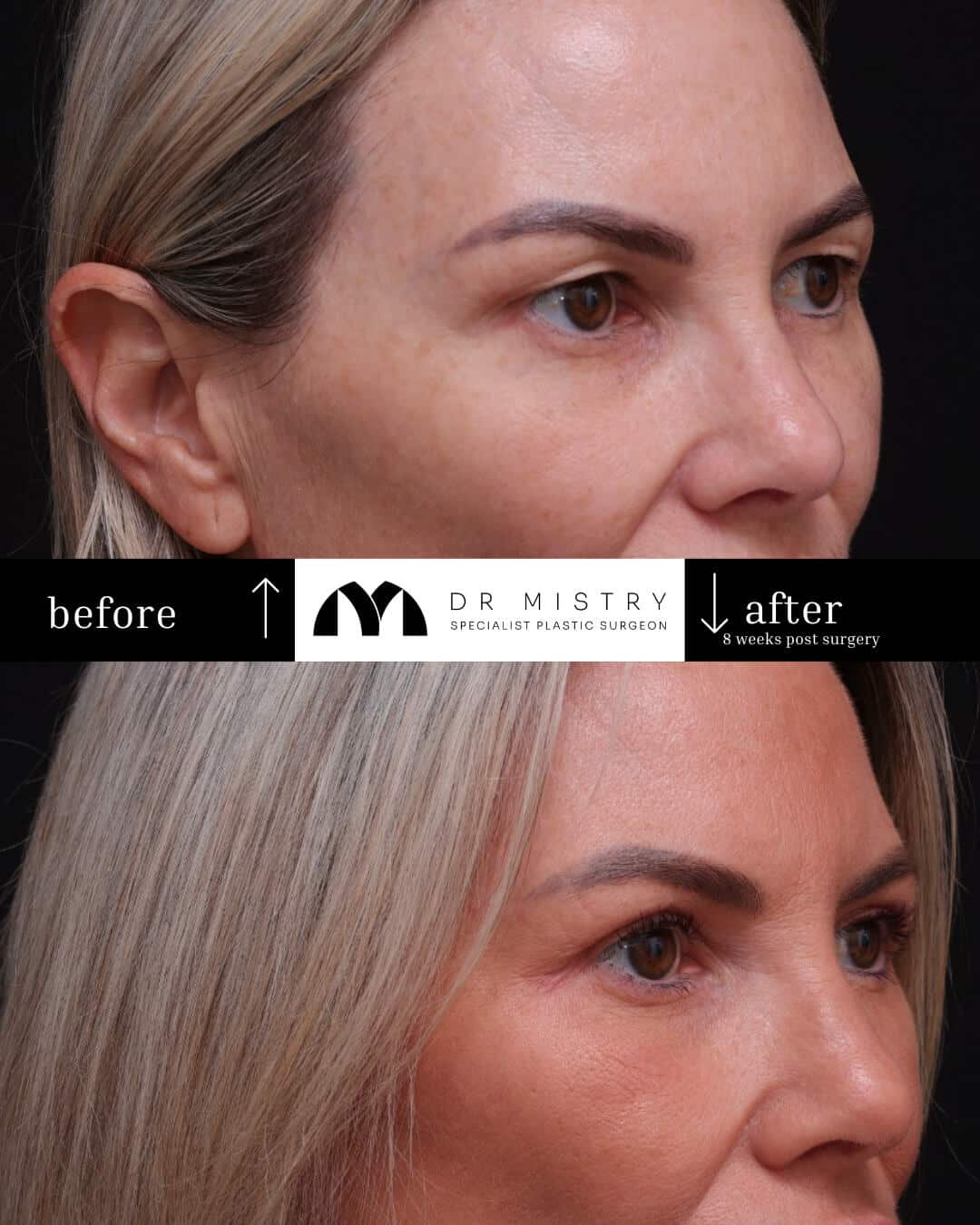
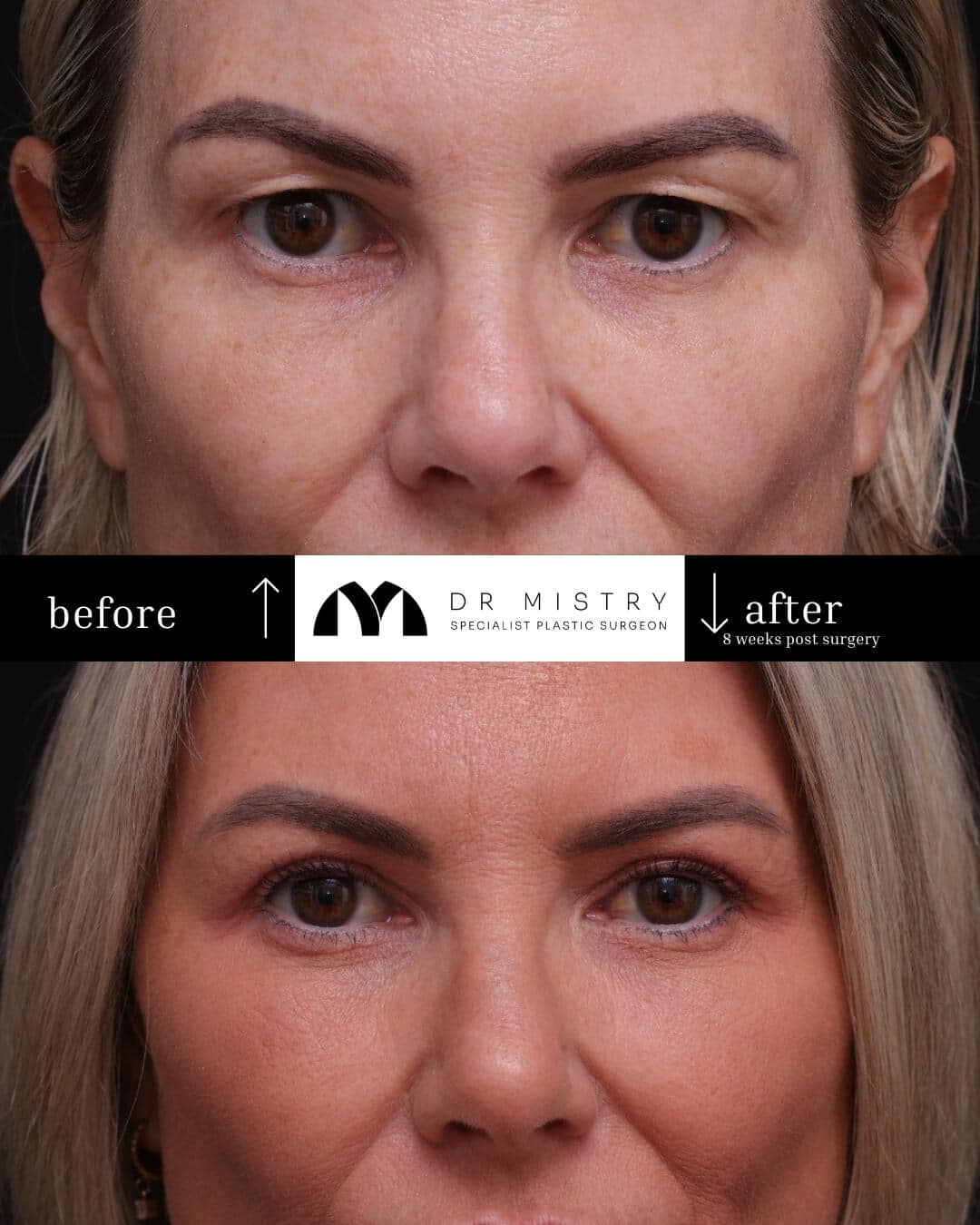
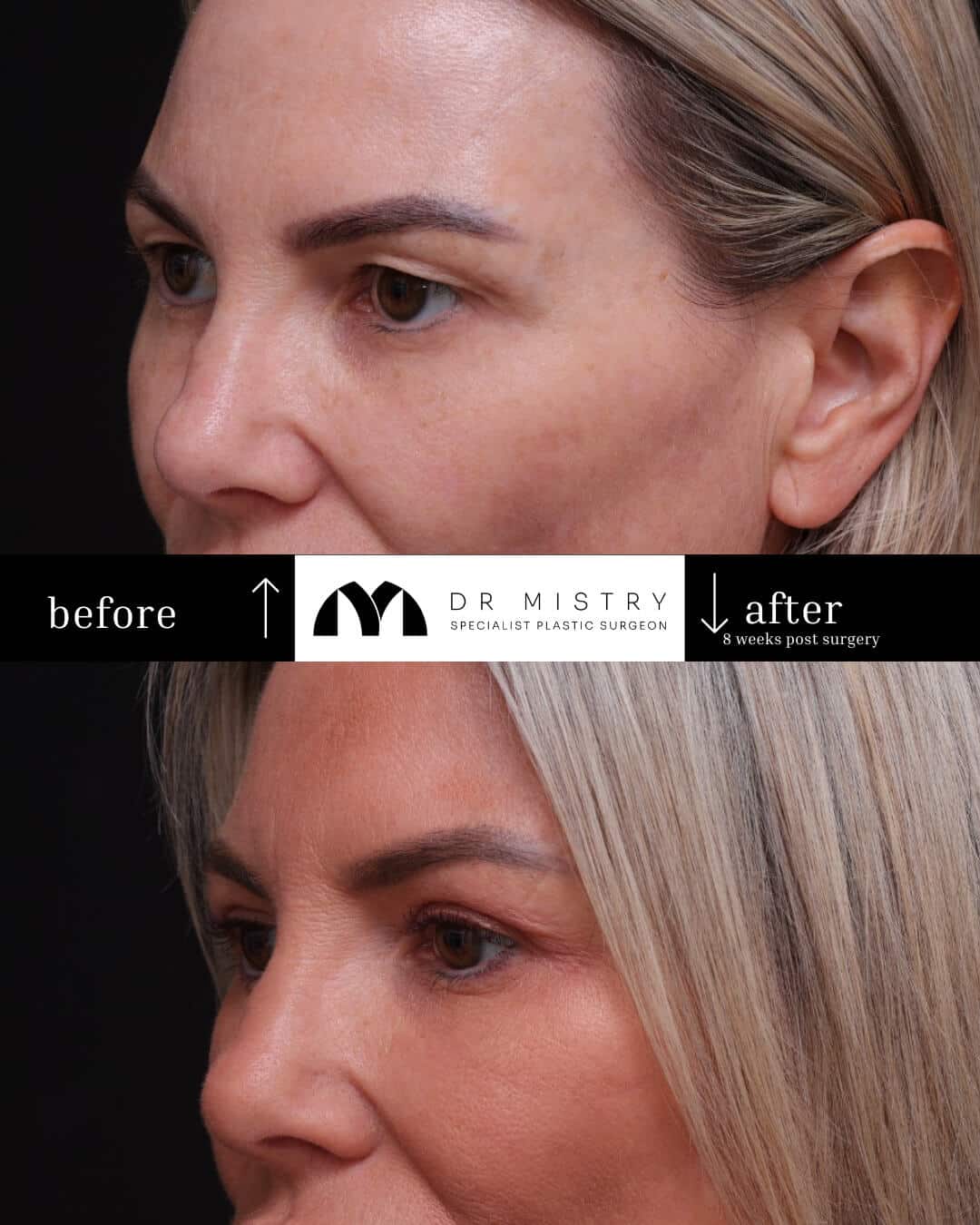
Disclaimer: The outcomes shown are specific to those patients and may not reflect the results experienced by others, as individual outcomes can vary due to a range of factors.
Common Questions Patients Ask During the First Week
Patients often raise similar questions during the early recovery period, even when they have already received postoperative instructions. This is not unusual. Once the patient is at home and observing the healing process directly, new questions often arise.
Common questions include whether the stitches are supposed to be visible, whether one side can heal differently from the other, whether the wound should still look pink after a few days, and whether a slightly raised line means that the scar will remain obvious. These are reasonable questions, particularly because the eyelids are so visible and because the early postoperative period can look unfamiliar.
Another common question is whether dissolving stitches should already be gone by a certain date. In practice, there is no single universal timeline that applies to every patient. Dissolving sutures behave differently depending on the material used, the local tissue environment, and the pace of individual healing. For that reason, general timeframes should always be interpreted in light of the advice provided by the treating clinic.
Patients may also ask whether it is normal for the incision to feel tight or itchy. These sensations can occur during healing, but the clinic should be contacted if symptoms are increasing rather than settling, or if new redness, discharge, or wound separation is present.
The Key Points to Remember About Blepharoplasty Stitches
Blepharoplasty stitches are used to support the incision after eyelid surgery while the wound begins to heal. The closure method is selected according to the surgical plan, the anatomy of the eyelid, and the clinical considerations of the case.
Both absorbable and non absorbable sutures are used in blepharoplasty. Absorbable sutures gradually break down over time, while non absorbable sutures are removed at a follow up appointment. The exact timing varies between individuals and depends on the material used and the wound care plan.
During the early recovery phase, the stitch line may appear pink, slightly raised, or associated with swelling, bruising, or light crusting. These changes can occur as part of the normal healing process. The appearance of the incision in the first week is not the same as the later appearance of a mature scar.
Postoperative care usually includes keeping the area clean as directed, avoiding unnecessary manipulation of the wound, using prescribed products if advised, and attending follow up appointments. Patients are encouraged to seek review if symptoms appear to be worsening rather than settling, or if there is uncertainty about any aspect of healing.
Blepharoplasty Stitches FAQs
Can stitches affect how the eyelid crease sits after surgery?
The position of the eyelid crease is primarily determined by the surgical plan and tissue adjustment rather than the stitches themselves. Stitches support the incision while healing begins but do not independently set the final crease position.
Is it normal for stitches to feel more noticeable at night?
Some patients report increased awareness of the stitch line later in the day, which may relate to fluid shifts or general eyelid fatigue. This does not necessarily indicate a problem, but persistent discomfort should be discussed with the clinic.
Why do stitches sometimes look more visible after swelling starts to settle?
As swelling reduces, the surrounding tissue becomes less full, which can make small details such as suture knots or threads more noticeable. This is a visual change rather than a change in the wound itself.
Can stitches move or shift after surgery?
Stitches are placed to remain stable during the early healing phase. A small visible change in position may reflect normal tissue movement rather than true displacement, but any concern about wound integrity should be reviewed.
Do stitches need to be covered, or can they be left exposed?
In most cases, eyelid stitches are left uncovered unless specific dressings are advised. The area is typically managed with gentle cleansing and any prescribed products rather than physical covering.
Why might one side feel tighter than the other?
Differences in swelling or tissue response between the two sides can lead to variations in sensation. It is not uncommon for one eyelid to feel tighter during the early stages of healing.
Is it possible for stitches to cause temporary small lumps along the incision?
Small raised areas can occur along the stitch line during healing and may relate to local tissue response or suture placement. These often change as the healing process continues.
Can environmental factors affect how stitches behave during recovery?
Exposure to heat, wind, or dry environments may influence how the eyelids feel, particularly in the early phase. These factors can affect comfort but do not usually alter the underlying healing process.
Do dissolving stitches always disappear completely on their own?
Absorbable sutures are designed to break down over time, but the process may not always be visually obvious. In some cases, small remnants may be present before fully resolving.
Can blinking or facial movement affect the stitches?
Normal blinking and facial movement are expected after surgery and are accounted for in the closure technique. Excessive rubbing or forceful pressure should be avoided, but routine movement does not typically disrupt the stitches.
Medical References
- Absorbable versus non-absorbable sutures in upper eyelid blepharoplasty: a systematic review of clinical outcomes and follow-up burden / BMC Ophthalmology, 2025 / https://link.springer.com/article/10.1186/s12886-025-04370-8
- Absorbable Sutures are Equally Efficacious to Non-absorbable Sutures in Upper Eyelid Blepharoplasty for Dermatochalasis: A Comparative Study / Aesthetic Plastic Surgery, 2025 / https://link.springer.com/article/10.1007/s00266-025-05286-w
- Minimizing Postoperative Scars in Upper Eyelid Blepharoplasty: A Concise Review / Surgeries, 2025 / https://www.mdpi.com/2673-4095/6/4/93
Are you Ready for Plastic Surgery? Take Our Quiz
Important Information
This article provides general information only and is not a substitute for personalised medical advice. Blepharoplasty is a surgical procedure and involves risks. Suitability for surgery, the type of wound closure used, and the postoperative course vary between individuals.
Dr Yezdi Mistry is a Specialist Plastic and Reconstructive Surgeon practising in Charlestown, NSW. Patients considering blepharoplasty, or recovering from eyelid surgery, should seek advice directly from a qualified health practitioner who has assessed their individual circumstances.
Further Reading
- Read Dr Yezdi Mistry’s Blog about Recovery After Blepharoplasty Performed in Clinic Rooms Under Local Anaesthetic
- Read Dr Yezdi Mistry’s Blog about Blepharoplasty FAQs
- Read Dr Yezdi Mistry’s Blog about Returning to Exercise After Blepharoplasty
Download Dr Mistry’s Excess Skin Surgery Guide