Breast reduction surgery is a common procedure sought by women who experience discomfort, physical limitations, or difficulty finding balance between proportion and comfort. While the motivations for surgery may vary, the foundation of every effective plan begins with understanding breast anatomy.
The structure and composition of the breast play an important role in determining how surgery is planned, how tissue behaves during healing, and the likely shape that develops over time. At Dr Yezdi Mistry’s practice in Charlestown, Newcastle, NSW, each consultation begins with a careful review of these anatomical principles to ensure an informed, individualised approach.
The Structure of the Breast
The female breast is composed of a combination of glandular, fatty, and connective tissues, all covered by an external layer of skin. Glandular tissue contains the lobules responsible for milk production, while fatty tissue surrounds these structures, influencing the overall size and softness of the breast. These elements are connected by fibrous bands known as Cooper’s ligaments, which provide internal support and help maintain shape.
Beneath the breast tissue lies the pectoralis major muscle, which forms the foundation but does not directly contribute to breast volume. The skin envelope varies in elasticity between individuals and is influenced by genetics, age, and lifestyle factors. Over time, gravity, weight fluctuations, and hormonal changes can alter the skin’s behaviour and the internal structure, leading to differences in shape or firmness.
Because no two breasts share the same proportion of glandular and fatty tissue, each patient’s anatomy must be carefully assessed. This understanding forms the basis of surgical planning for breast reduction, as it determines how tissue is removed and reshaped while maintaining the blood supply, sensation, and natural contour.
How Anatomy Influences Breast Reduction Planning
Every breast reduction procedure is customised to the patient’s anatomy and goals. The distribution of glandular and fatty tissue affects how much volume can be safely reduced and which surgical techniques are most appropriate. Denser breasts, with a higher proportion of glandular tissue, often require precise reshaping to achieve symmetry and projection. In contrast, breasts with more fatty tissue tend to be softer and may change more noticeably with weight variation or ageing.
Skin quality also plays a significant role in surgical planning. Patients with firm, elastic skin generally experience better redraping after tissue removal, while those with reduced elasticity may require additional adjustments to achieve balance and support. The natural position of the nipple and areola must also be considered, as it influences how the breast will appear after surgery and how circulation and nerve pathways are preserved.
Dr Yezdi Mistry’s approach begins with a detailed clinical assessment, evaluating tissue composition, chest wall shape, and overall body proportions. By combining anatomical insight with surgical precision, he develops an individualised plan that balances size reduction with structural preservation, ensuring both aesthetic and functional outcomes are appropriately addressed.
The Role of Blood Supply and Sensory Nerves
A clear understanding of breast vascular anatomy is essential for safe and effective surgery. The breast receives blood from several sources, including the internal mammary and lateral thoracic arteries, which branch extensively to nourish the tissue and nipple-areola complex. During surgery, these vessels must be carefully protected to maintain tissue viability and reduce the risk of healing complications.
Equally important are the sensory nerves that supply the nipple and surrounding skin. The primary nerve involved in sensation is the fourth intercostal nerve, which travels through the breast tissue to the nipple. Preserving this nerve and its branches is an important consideration during surgery, particularly in patients for whom nipple sensation is a priority.
Dr Mistry’s surgical planning always prioritises the preservation of vascular and nerve pathways where possible. This approach reflects a balance between aesthetic outcomes and functional integrity, ensuring that every reduction is performed with respect for the underlying biology of the breast.
How Breast Composition Affects Surgical Outcomes
The proportion of glandular to fatty tissue in each breast significantly influences the surgical process and final outcome. Breasts that contain more glandular tissue tend to be firmer and denser, often requiring precise surgical reshaping to achieve balance and projection. In contrast, breasts with a higher proportion of fat are softer and may respond differently over time, particularly with weight fluctuations or hormonal changes.
Another factor influencing outcome is the behaviour of the overlying skin. Skin elasticity determines how well the breast can adapt to its new size and shape after tissue removal. When elasticity is reduced, the breast may settle more gradually during healing, which is a normal part of the process. Understanding this helps patients set realistic expectations for how their results will evolve in the months following surgery.
Dr Mistry tailors each procedure to reflect these anatomical differences. By addressing the unique properties of breast tissue and skin behaviour, his approach supports long-term shape retention and proportionate outcomes that align with the patient’s overall frame.
The Surgical Process and Healing Considerations
During breast reduction surgery, excess tissue and skin are removed, and the remaining tissue is reshaped to create a balanced contour. The nipple and areola are repositioned to a higher, more proportionate location while maintaining their connection to underlying blood vessels and nerves. Incisions are placed carefully to allow effective tissue reduction while minimising tension during healing.
The initial breast reduction recovery period typically involves swelling, firmness, and sensitivity in the breasts, which gradually improve over several weeks. Each patient’s healing timeline is unique, influenced by factors such as tissue type, age, and general health. The final breast shape develops over several months as tissues settle and the skin adapts to the new structure.
Dr Mistry provides detailed postoperative care instructions and schedules regular reviews to monitor healing and support recovery. This structured approach ensures that each patient receives appropriate guidance during every phase of the process, with attention to comfort, safety, and realistic progression.
Breast Reduction Before and After Photos
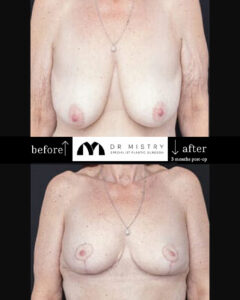
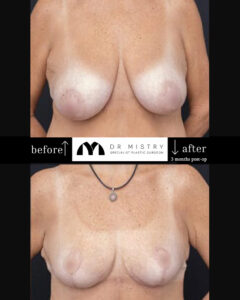

Disclaimer: The outcomes shown are specific to those patients and may not reflect the results experienced by others, as individual outcomes can vary due to a range of factors.
Long-Term Tissue Behaviour After Breast Reduction
The breasts continue to change naturally throughout life due to hormonal shifts, weight fluctuation, and the ageing process. These changes can alter the firmness, elasticity, and projection of the breast, even after reduction surgery. Maintaining a stable weight and wearing well-fitting support garments can help sustain the achieved proportions and reduce strain on the skin and connective tissues.
Over time, small variations in symmetry or shape may occur as tissues respond to gravity and other biological influences. These are expected outcomes of the natural ageing process rather than indications of surgical failure. Dr Mistry discusses these long-term factors with every patient so that expectations remain grounded in anatomical reality and informed understanding.
A key advantage of breast reduction surgery performed with anatomical precision is the predictable improvement in balance and comfort. By respecting natural tissue behaviour and maintaining healthy circulation, patients can achieve results that evolve gracefully and maintain proportion over time.
When Is an Assessment Helpful?

A medical assessment with a Specialist Plastic and Reconstructive Surgeon can be valuable for anyone experiencing discomfort or difficulty related to breast size. Women often seek consultation when they experience back, neck, or shoulder pain, or when their breast size interferes with clothing fit or physical activity. Beyond addressing symptoms, an assessment provides an opportunity to understand one’s breast anatomy in detail and explore whether reduction surgery is appropriate.
During consultation, Dr Mistry performs a thorough clinical evaluation, including an assessment of tissue composition, skin quality, and proportional balance. He explains the factors that contribute to each individual’s presentation and outlines possible treatment pathways in clear, factual terms. This patient-centred approach ensures that decisions are made collaboratively, with all medical and personal considerations discussed.
By the end of the assessment, patients leave with a clearer understanding of how anatomy affects both symptoms and surgical planning. This educational focus supports confidence in decision-making and fosters realistic expectations about outcomes and recovery.
Breast Anatomy and Reduction Surgery FAQs
Why do some women have denser breasts than others?
Breast density depends on various factors. Some women have denser breasts due to a combination of factors, which include: genetics, age, hormones, body composition, pregnancy and breastfeeding histories, as well as certain medications and lifestyle factors.
Can breast anatomy affect postoperative sensation?
Yes. The arrangement of sensory nerves varies slightly between individuals. Careful preservation of nerve pathways during surgery helps maintain nipple sensation where possible.
Does breast shape change after menopause?
Yes, hormonal changes can alter glandular content and increase the proportion of fatty tissue, often resulting in a softer texture and mild droop over time.
Can weight fluctuations influence results after reduction?
Yes. Significant weight gain or loss can affect breast volume because fat contributes to size. Stable weight supports long-term contour consistency.
Are both breasts ever exactly the same?
Natural asymmetry is common. During surgery, adjustments are made to help improve balance while respecting each breast’s unique anatomy.
What determines nipple position during breast reduction?
The new nipple location is based on chest proportions and aesthetic balance. It remains attached to the underlying tissue to preserve circulation and function.
Can breast reduction surgery impact breastfeeding in the future?
Depending on technique and how much glandular tissue is removed, some women may still breastfeed after surgery, though outcomes vary. This is discussed in detail during consultation.
Why does scar placement differ between techniques?
Incision patterns vary according to tissue amount and shape goals. Common approaches include vertical (lollipop) or anchor-shaped patterns chosen for best tissue management.
How does skin elasticity affect long-term results?
Good skin quality supports a firmer, longer-lasting shape, while reduced elasticity may lead to gradual settling over time. These characteristics are assessed preoperatively.
How long do breasts take to settle after surgery?
The final shape generally becomes apparent after several months as swelling resolves and tissues soften. Dr Mistry monitors each patient’s progress to ensure healing aligns with expectations.
Medical References
- Comparative Outcomes of Superomedial and Inferior Pedicles in Breast Reduction and Mastopexy: A Meta-Analysis of 5123 Breasts / Aesthetic Plastic Surgery / https://pmc.ncbi.nlm.nih.gov/articles/PMC11965157/
- Breast Vascularization and Its Implication in Breast Reduction and Mastopexy Surgery: Anatomical Study / Journal of Personalized Medicine / https://www.mdpi.com/2075-4426/14/5/536
- Choosing the Right Pedicle for Reduction Mammoplasty: Balancing Vascularity and Aesthetics / International Journal of Aesthetic Plastic Surgery / https://journals.sagepub.com/doi/10.1177/30499240251344018
- Correlation between Capsular Contracture Rates and Access Incision Location in Vertical Augmentation Mastopexy / Plastic and Reconstructive Surgery / https://journals.lww.com/plasreconsurg/fulltext/2022/11000/correlation_between_capsular_contracture_rates_and.18.aspx
- Evaluation for national guideline adherence and patient-reported outcomes following breast reduction surgery in a public healthcare setting / JPRAS Open / https://www.sciencedirect.com/science/article/pii/S2352587825001147
Are you Ready for Plastic Surgery? Take Our Quiz
A Patient-Centred Approach in Charlestown
Understanding breast anatomy is the foundation of safe and effective breast reduction surgery. It provides insight into how tissues behave, how healing occurs, and what outcomes are achievable. Every patient’s anatomy is unique, and this individuality is central to Dr Yezdi Mistry’s approach to surgical planning and care.
With years of experience in plastic and reconstructive breast surgery, Dr Mistry combines anatomical understanding with precise surgical technique. He provides balanced, evidence-based care for women in Charlestown, Newcastle and the Hunter region who are seeking information about breast reduction. His focus remains on education, communication, and ongoing support, allowing patients to make informed choices based on clarity and trust.
Evidence-Based Practice
All medical information presented by Dr Yezdi Mistry is based on current, peer-reviewed research and recognised surgical guidelines. Each article is reviewed to ensure accuracy, alignment with the standards of the Royal Australasian College of Surgeons (RACS) and the Australian Society of Plastic Surgeons (ASPS), and compliance with AHPRA advertising requirements.
Taking the Next Step
If you are considering breast reduction and would like to understand how your anatomy influences your options, arranging a consultation can be an important first step. Dr Yezdi Mistry, Specialist Plastic and Reconstructive Surgeon in Charlestown, offers comprehensive evaluations that focus on individual anatomy and realistic expectations.
Each consultation includes a detailed discussion of surgical design, healing behaviour, and long-term outcomes, ensuring that decisions are made with confidence and full understanding. To learn more or to book an appointment, contact Dr Mistry’s Charlestown practice and explore whether breast reduction may be suitable for your needs.
Download Dr Mistry’s Breast Surgery Guide


Further Reading
- Read more about Breast Lift (Mastopexy)
- Read more about Breast Implant Replacement
- Read Dr Mistry’s Blog on The Possible Benefits of Breast Reduction: More Than Just Aesthetic
- Read Dr Mistry’s Blog on Breast Reduction FAQs
- Read Dr Mistry’s Blog on Breast Reduction Recovery Guide: What to Expect After Surgery in Newcastle