Significant weight loss is an important health milestone for many individuals. However, after achieving sustained weight reduction, some people notice changes in the behaviour of their skin, especially around areas where the volume beneath has reduced substantially. Understanding how skin adapts to changes after weight loss can help people make informed decisions about whether to pursue clinical evaluation and what options may be appropriate.
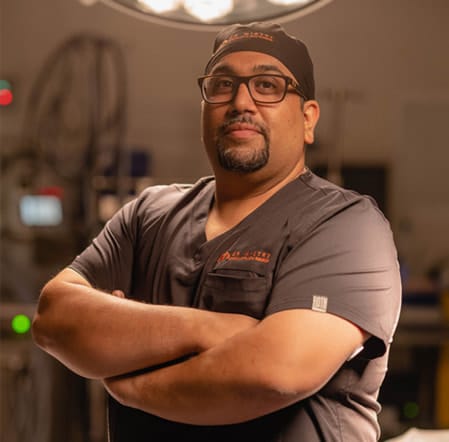
At Dr Yezdi Mistry’s practice in Charlestown, Newcastle NSW, patients receive clear explanations of both surgical and non-surgical pathways for addressing skin laxity following weight loss, grounded in evidence and rooted in individual anatomy and goals.
Understanding Skin Behaviour After Weight Loss
The skin is a dynamic organ composed of multiple layers, including an outer epidermis supported by a deeper dermis rich in collagen and elastin fibres. These structural proteins contribute to the skin’s capacity to accommodate changes in underlying volume. When weight loss occurs, the tissues beneath the skin reduce in volume; how the skin responds depends on several factors.
Factors influencing skin response after weight loss include:
- Age: Collagen and elastin production decrease with age, reducing the skin’s capacity to conform after volume changes.
- Duration of prior stretch: Skin that has been distended for long periods may have reduced recoil.
- Genetics: Variation in skin quality and healing potential is influenced by hereditary factors.
- Rate and magnitude of weight loss: Rapid or significant reduction in subcutaneous tissue can challenge the skin’s ability to adapt.
- Lifestyle factors: Nutrition, smoking status and overall health can affect tissue quality and wound healing.
These factors collectively influence how skin behaves following weight loss. In some individuals, the skin may retract sufficiently over time. In others, persistent laxity may remain noticeable, particularly in areas such as the abdomen, upper arms, thighs, and neck.
Download Dr Mistry’s Excess Skin Surgery Guide

What Is Skin Laxity After Weight Loss?
After substantial weight loss, especially following obesity or bariatric surgery, the skin may appear loose, wrinkled, or hanging in certain regions of the body. This condition is not a disease but a physical outcome of reduced underlying volume combined with variable skin elasticity.
Loose skin is distinct from concerns such as fatty deposits or muscle weakness; it represents the response of the skin and superficial connective tissues to changes beneath them. Clinical evaluation helps differentiate between residual fat, soft tissue distribution and the degree of laxity due to skin behaviour.
Clinical Assessment at Dr Yezdi Mistry’s Newcastle Practice
A thorough clinical assessment is the first step in determining which options are suitable. At the consultation, Dr Mistry reviews:
- Medical history: including weight history, previous surgeries, medications and any underlying conditions.
- Physical examination: focusing on skin quality, distribution of laxity, and any asymmetries or regional differences.
- Functional considerations: such as how loose skin may affect movement, comfort or everyday activities.
- Imaging where indicated: in some cases, ultrasound or other modalities may assist in clarifying tissue layers.
Throughout the consultation process, emphasis is placed on clear communication and medically accurate explanations. Dr Mistry draws on his specialist training and years of practising plastic and reconstructive surgery to support informed discussion of potential pathways.
Are you Ready for Plastic Surgery? Take Our Quiz
Non-Surgical Options
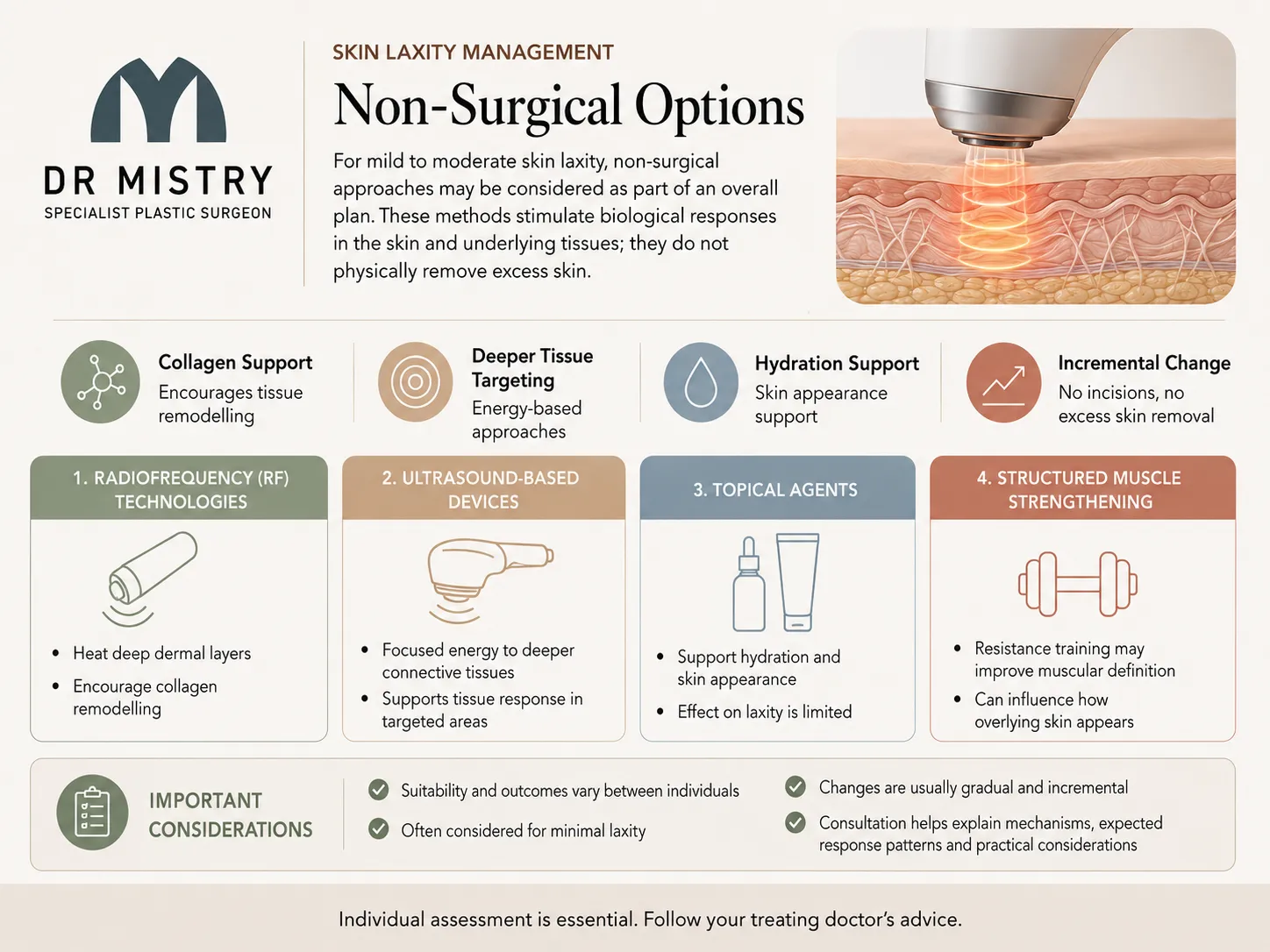
For individuals with mild to moderate skin laxity, non-surgical approaches may be considered as part of an overall plan. It is important to understand that non-surgical methods typically work by stimulating biological responses in the skin and underlying tissues; they do not physically remove excess skin.
Common non-surgical approaches include:
- Radiofrequency (RF) technologies: These use energy to heat deep dermal layers, encouraging collagen remodelling.
- Ultrasound-based devices: Utilise focused energy to target deeper connective tissues.
- Topical agents: Certain medical skincare products support hydration and may aid the skin’s appearance, but their effect on laxity is limited.
- Structured program of muscle strengthening: Resistance training can improve underlying muscular definition, which may influence how the overlying skin appears.
The suitability and expected outcomes of each non-surgical method vary between individuals. These options may be useful for people with minimal laxity or those seeking incremental changes without incisions. During consultation, Dr Mistry explains the mechanisms involved, anticipated response patterns and practical considerations.
Surgical Options for Skin Tightening
For individuals with moderate to significant residual skin laxity after weight loss, surgical approaches may provide more reliable and substantial adjustment.
Types of surgical skin tightening procedures may include:
- Abdominoplasty (tummy tuck): Removes excess abdominal skin and may tighten underlying musculature when indicated.
- Brachioplasty (upper arm lift): Addresses lax skin along the upper arms.
- Thigh lift: Targets excess skin along the inner or outer thighs.
- Body lift procedures: Comprehensive approach to areas such as the lower trunk and buttock region when multiple regions are involved.
Each surgical option involves tailored planning based on individual anatomy, the distribution of skin laxity, and health considerations. Incisions are strategically placed to achieve the desired contour while respecting natural landmarks. The goal is to achieve proportional improvement with attention to tissue behaviour and healing principles.
During consultation, Dr Mistry will explain the details of the procedure under discussion, including:
- The surgical technique and rationale
- The expected course of healing
- Requirements for follow-up and support
- Potential risks and how they are managed
This discussion supports deliberate decision-making without overstating outcomes or using promotional language.
Abdominoplasty Before and After Photos
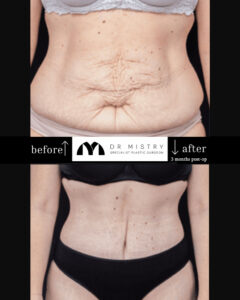
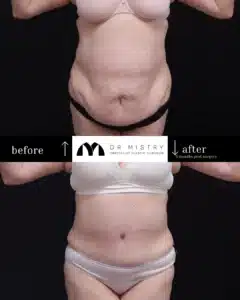
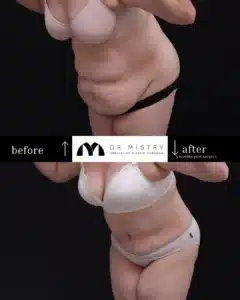
Disclaimer: The outcomes shown are specific to those patients and may not reflect the results experienced by others, as individual outcomes can vary due to a range of factors.
Healing and Recovery After Procedures
Healing after any surgical intervention occurs over weeks to months. Typical early signs include swelling, firmness and changes in tissue texture as the body adapts. Follow-up at scheduled intervals allows assessment of healing progress and guidance on activity levels tailored to recovery.
Unlike non-surgical approaches, surgical procedures involve incisions and repositioning or removal of tissue; they require appropriate preparation and postoperative care. Dr Mistry supports patients with clear preoperative guidance and structured reviews after surgery, placing emphasis on safety and realistic recovery progression.
Long-Term Considerations
Long-term outcomes depend on factors such as weight stability, activity levels, and ongoing general health. Maintaining a stable weight supports the results achieved, as significant weight fluctuations may influence tissue behaviour over time.
A holistic approach to wellness – including balanced nutrition, structured physical activity and consistent medical follow-up – helps individuals support overall tissue health and general wellbeing.
When an Assessment May Help
An assessment with a Specialist Plastic & Reconstructive Surgeon can be helpful when:
- Loose skin persists despite time and general lifestyle measures
- The appearance of certain areas does not match expectations based on weight history
- You would like professional insight into whether surgical or non-surgical options are more appropriate
An evaluation with Dr Yezdi Mistry provides reliable, medically grounded information and helps clarify the pathways that best suit your anatomy and goals.
Skin Laxity After Weight Loss FAQs
Can loose skin improve naturally over time after weight loss?
Yes, mild laxity may improve gradually as collagen remodelling continues. However, the degree of tightening depends on age, skin thickness, and how long the skin was previously stretched. For many individuals, noticeable improvement occurs in the first 12–18 months after weight stabilisation.
Why does loose skin remain even when I exercise regularly?
Exercise strengthens the underlying muscles, but it does not directly alter skin elasticity. Improved muscle tone can support overall shape, though persistent skin laxity is determined mainly by the structural proteins within the dermis and the amount of redundant tissue.
Are there vitamins or supplements that can help tighten skin?
A balanced diet supports general skin health, particularly nutrients such as vitamin C, zinc, and protein, which assist collagen formation. However, no supplement can physically remove excess skin or replace the need for medical assessment when laxity is significant.
Is skin tightening different for people who lost weight through surgery compared to diet and exercise?
Yes, patients who lose weight rapidly after bariatric surgery may experience more pronounced skin laxity due to the speed and magnitude of change. Those who lose weight gradually often allow the skin more time to adapt, although results vary widely between individuals.
Can non-surgical tightening devices replace surgery for loose skin?
Non-surgical options may stimulate mild tightening but do not physically remove excess tissue. For moderate to severe laxity, surgical removal remains the most effective method to achieve measurable improvement in contour.
Does skin elasticity differ across body areas?
Yes, elasticity varies depending on local collagen density, movement, and sun exposure. Areas such as the inner arms, thighs, and abdomen tend to show greater laxity after weight loss because their skin is thinner and less supported by underlying structures.
How long should I wait after weight loss before considering skin tightening surgery?
It is generally recommended to maintain a stable weight for at least 6–12 months before surgical consideration. This allows the skin to reach its best possible natural retraction and ensures results are based on a stable body composition.
Can weight gain after skin tightening procedures affect results?
Yes, significant weight fluctuations can stretch the skin again and alter surgical outcomes. Maintaining a steady, healthy weight supports long-term results and minimises the risk of recurrence of laxity.
Is it possible to combine several skin-tightening areas in one procedure?
In some cases, combined procedures can be performed safely, depending on the patient’s health and surgical plan. Dr Mistry assesses each person individually to determine the safest and most effective sequencing based on clinical priorities and recovery needs.
Why does skin feel different after large weight changes?
After substantial weight loss, skin may feel softer, thinner, or less firm due to reduced collagen density and changes in the supportive fat layer beneath. These physical sensations are common and reflect the skin’s adaptation to new structural conditions rather than any ongoing health concern.
Medical References
- Investigating the Safety of Multiple Body Contouring Procedures in Massive Weight Loss Patients / Aesthetic Plastic Surgery / https://pmc.ncbi.nlm.nih.gov/articles/PMC9729125/
- Cosmetic Procedures After Massive Weight Loss Surgery: A Guide for Prospective Patients / Cureus / https://pmc.ncbi.nlm.nih.gov/articles/PMC11611412/
- Body contouring surgery in a massive weight loss patient: An overview / Indian Journal of Plastic Surgery / https://pmc.ncbi.nlm.nih.gov/articles/PMC2825131/
- Comparison of Histological Skin Changes After Massive Weight Loss in Post-bariatric and Non-bariatric Patients / Obesity Surgery / https://link.springer.com/article/10.1007/s11695-024-07066-y
A Patient-Centred Approach in Charlestown
Loose skin after weight loss is a common concern for many individuals seeking clarity about the behaviour of their tissues. Understanding the difference between biological adaptation and persistent laxity helps guide appropriate assessment and discussion. With specialist training, clinical experience and years of practising in plastic and reconstructive surgery, Dr Yezdi Mistry provides patients in Charlestown, Newcastle and the Hunter region with a balanced and medically informed approach. His focus on clear explanation and evidence-based guidance supports individuals in considering their options in a well-supported and informed manner.
Taking the Next Step: A Consultation With Dr Yezdi Mistry
If you have achieved significant weight loss and are noticing persistent skin laxity, seeking a professional assessment can help you understand your options clearly.
Dr Yezdi Mistry, Specialist Plastic and Reconstructive Surgeon in Charlestown, Newcastle NSW, provides comprehensive evaluations that focus on individual anatomy, realistic expectations and medically appropriate pathways.
To arrange a consultation, contact Dr Mistry’s Charlestown practice to discuss your concerns and explore whether surgical or non-surgical skin tightening options may be suitable for you. Each consultation is conducted with a focus on evidence-based advice and patient-centred care.
Further Reading
- Read more about Post Weight Loss Surgery
- Read more about Fleur De Lis Abdominoplasty
- Read more about Renuvion® Skin Tightening
- Read more about Extended Liposuction Abdominoplasty
- Read Dr Mistry’s Blog on Renuvion vs BodyTite: Understanding the Differences for Adults Considering Body Reshaping Procedures
- Read Dr Mistry’s Blog on What is High Def Lipo and How Does it Work?
- Read Dr Mistry’s Blog on Benefits of Being in a Health Fund for Post Massive Weight Loss Surgery Patients?