Gynaecomastia surgery, also known as male breast reduction surgery, is performed to address enlarged breast tissue in men. This condition can affect one or both sides of the chest and may cause discomfort, tenderness, difficulty finding well-fitting clothing, and in some cases, psychological distress. While some men consider surgery for aesthetic reasons, many seek treatment due to the physical and functional symptoms associated with the condition. Understandably, a common question from patients in Newcastle and the Hunter region is whether Medicare contributes to the cost of gynaecomastia surgery.
Dr. Yezdi Mistry, Specialist Plastic & Reconstructive Surgeon in Newcastle, regularly assists patients in answering this question. His practice helps individuals understand Medicare’s requirements, assess their eligibility, and explore treatment options that support both function and wellbeing.
Understanding Medicare and Gynaecomastia Surgery
Medicare is Australia’s universal health insurance system, designed to assist with the costs of medically necessary procedures. Cosmetic procedures performed without a medical reason are not eligible for rebates. However, in circumstances where gynaecomastia surgery is required to treat pain, tenderness, or other symptoms, Medicare may provide a rebate under specific Medicare Benefits Schedule (MBS) item number (#31525, #31526 or #45585). If you’re planning treatment, you may also want to read our guide on Recovery After Gynaecomastia Surgery to understand what to expect after the procedure.
Eligibility Criteria for Medicare Coverage
To qualify for Medicare support, strict criteria must be met. These include:
- Persistent gynaecomastia: Enlargement of breast tissue that has not resolved with time, lifestyle changes, or medical management.
- Physical symptoms: Ongoing pain, breast tenderness, or recurrent skin irritation under the breast fold.
- Functional impact: Difficulties with daily activities, exercise, or finding appropriate clothing due to enlarged breast tissue.
- Psychological impact with clinical confirmation: While emotional distress alone is not sufficient, Medicare recognises functional impairment combined with physical symptoms.
- Medical evaluation: A Specialist Plastic Surgeon must confirm the diagnosis, supported by a physical examination and, where appropriate, medical imaging or pathology.
- Exclusion of other causes: Hormonal conditions, medication effects, or underlying health issues must be assessed and excluded by your doctor before surgery is considered.
If these requirements are met, your surgeon can apply the appropriate MBS item number (#31525, #31526 or #45585), which allows you to claim a Medicare rebate.
The Process of Accessing Medicare for Gynaecomastia Surgery
- GP Referral – A referral from your General Practitioner (GP) is required before booking an appointment with a Specialist Plastic Surgeon.
- Specialist Consultation – In your consultation with Dr Yezdi Mistry, Specialist Plastic & Reconstructive Surgeon in Charlestown, Newcastle, your history, symptoms, and examination findings will be assessed.
- Investigations – Additional tests such as blood tests (to check hormone levels) or imaging may be requested to rule out other conditions that can mimic gynaecomastia.
- Clinical Documentation – If you meet Medicare criteria, documentation will be completed to support the use of the relevant MBS item number.
- Surgery Planning – Once eligibility is confirmed, surgery can be scheduled and Medicare rebates applied where appropriate.
Gynaecomastia Before and After Photos


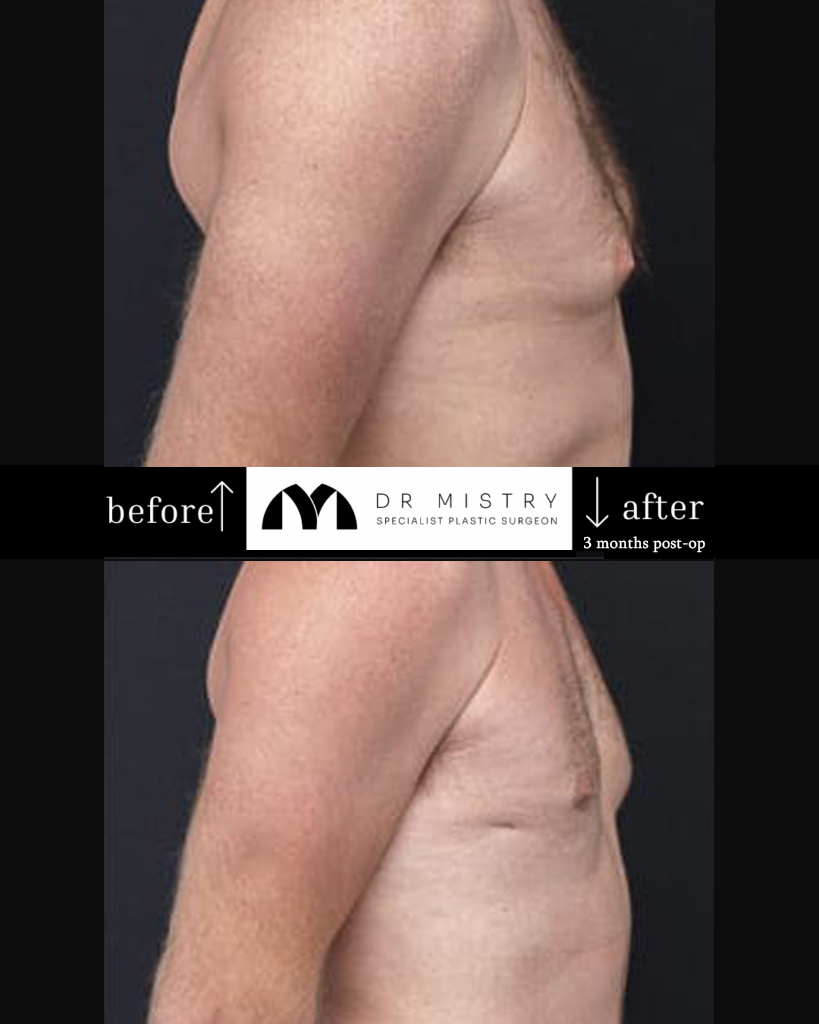
Disclaimer: The outcomes shown are specific to those patients and may not reflect the results experienced by others, as individual outcomes can vary due to a range of factors.
What Is the Difference Between Cosmetic and Medically Necessary Gynaecomastia Surgery?
- Cosmetic gynaecomastia surgery: Surgery performed solely to change the appearance of the chest in men who do not have physical symptoms or functional limitations. This type of surgery is not covered by Medicare.
- Medically necessary gynaecomastia surgery: Surgery required when enlarged breast tissue leads to pain, tenderness, or functional difficulty. Medicare may provide partial rebates for this surgery if clinical requirements are met.
Other Considerations
While Medicare may provide partial financial assistance when medical necessity is demonstrated, it does not cover the full cost of surgery. Out-of-pocket expenses may include:
- Hospital and theatre fees
- Anaesthetist fees
- Specialist Plastic Surgeon’s fees
Private health insurance may cover some of these additional expenses if the patient is eligible for a Medicare rebate and their policy includes hospital cover for plastic and reconstructive surgery. It is important to confirm details directly with your health fund.
Why Choose a Specialist Plastic Surgeon in Newcastle?
When considering gynaecomastia surgery, it is important to consult a fully qualified Specialist Plastic Surgeon. Dr Yezdi Mistry, based in Charlestown, Newcastle, is a FRACS (Plastic Surgery) qualified surgeon. He provides patient-centred care, ensuring each individual undergoes a comprehensive assessment with evidence-based advice before making a decision about surgery.
FAQs about Medicare and Gynaecomastia Surgery
Does Medicare cover gynaecomastia surgery for teenagers?
Yes, in certain cases. If the condition is persistent, symptomatic, and unlikely to resolve naturally, Medicare may provide assistance provided all clinical criteria are met.
Do I need a referral from my GP?
Yes. A GP referral is required to see a Specialist Plastic Surgeon and access a Medicare rebate.
What tests are needed before surgery?
Blood tests, imaging, or other investigations may be recommended to exclude underlying causes of breast enlargement such as hormonal changes or medication effects.
Is gynaecomastia surgery covered if it is for appearance only?
No. Medicare does not cover surgery performed purely for cosmetic reasons without documented physical symptoms or functional problems.
Can private health insurance help with costs?
Yes, if you meet the Medicare criteria and hold the right level of cover, private health insurance may help with hospital or theatre costs.
Will Medicare cover revision surgery for gynaecomastia?
Revision surgery may attract a Medicare rebate if medical symptoms persist and clinical documentation supports medical necessity. Cosmetic revision is not covered.
Does weight loss resolve gynaecomastia?
In some cases, weight loss may reduce fatty tissue in the chest. However, true gynaecomastia involves glandular tissue, which does not always resolve with weight management. A Specialist Plastic Surgeon can assess whether surgery is appropriate.
Is gynaecomastia surgery permanent?
The removal of glandular tissue is typically long-lasting. However, new breast tissue growth may occur if there are future hormonal changes, medication use, or significant weight gain.
Medical References
Cross-chest liposuction plus gland resection through single incision for gynecomastia treatment – PMC (PubMed Central)
https://pmc.ncbi.nlm.nih.gov/articles/PMC12224700/
Effective minimally invasive strategy for mixed-type gynecomastia: vacuum-assisted mastectomy combined with power-assisted liposuction – ScienceDirect
https://www.sciencedirect.com/science/article/abs/pii/S1748681524005941
Comprehensive aesthetic corrections of gynecomastia with enhanced liposuction combined with pull-through and bottom-up technique – ScienceDirect https://www.sciencedirect.com/science/article/pii/S1015958423011533
Are you Ready for Plastic Surgery? Take Our Quiz
Final Thoughts
Gynaecomastia surgery may provide relief from the physical and functional symptoms associated with enlarged breast tissue. While Medicare does not provide rebates for procedures performed only for cosmetic reasons, patients in Newcastle who meet the strict medical eligibility requirements may be eligible for partial assistance through the Medicare Benefits Schedule.
Dr Yezdi Mistry, Specialist Plastic & Reconstructive Surgeon in Charlestown, Newcastle, provides thorough consultations to assess eligibility, explain Medicare pathways, and guide patients through their surgical options with evidence-based recommendations.
Download Dr Mistry’s Gynaecomastia Guide


Further Reading
- Read more about Gynaecomastia/Male Chest Reduction
- Read Dr Mistry’s Blog on Everything you need to know about male chest reduction surgery
- Read Dr Mistry’s Blog on What Is Adult Gynaecomastia?
- Read Dr Mistry’s Blog on What Is Bodybuilder Gynaecomastia? A Detailed Medical Guide
- Read Dr Mistry’s Blog on Gynaecomastia FAQs